Report · 2025
Report of Special Counsel Jack Smith, Volume One: The Election Case
The Special Counsel's account of Donald Trump's attempt to overturn the 2020 election. The case was dropped when he won the 2024 election, so it never reached a jury. This is the evidence prosecutors would have put before one, and their conclusion that it was enough to convict.
Introduction by Reports that Matter. Only words in quotation marks are the report's own; every link opens them in context.
Background
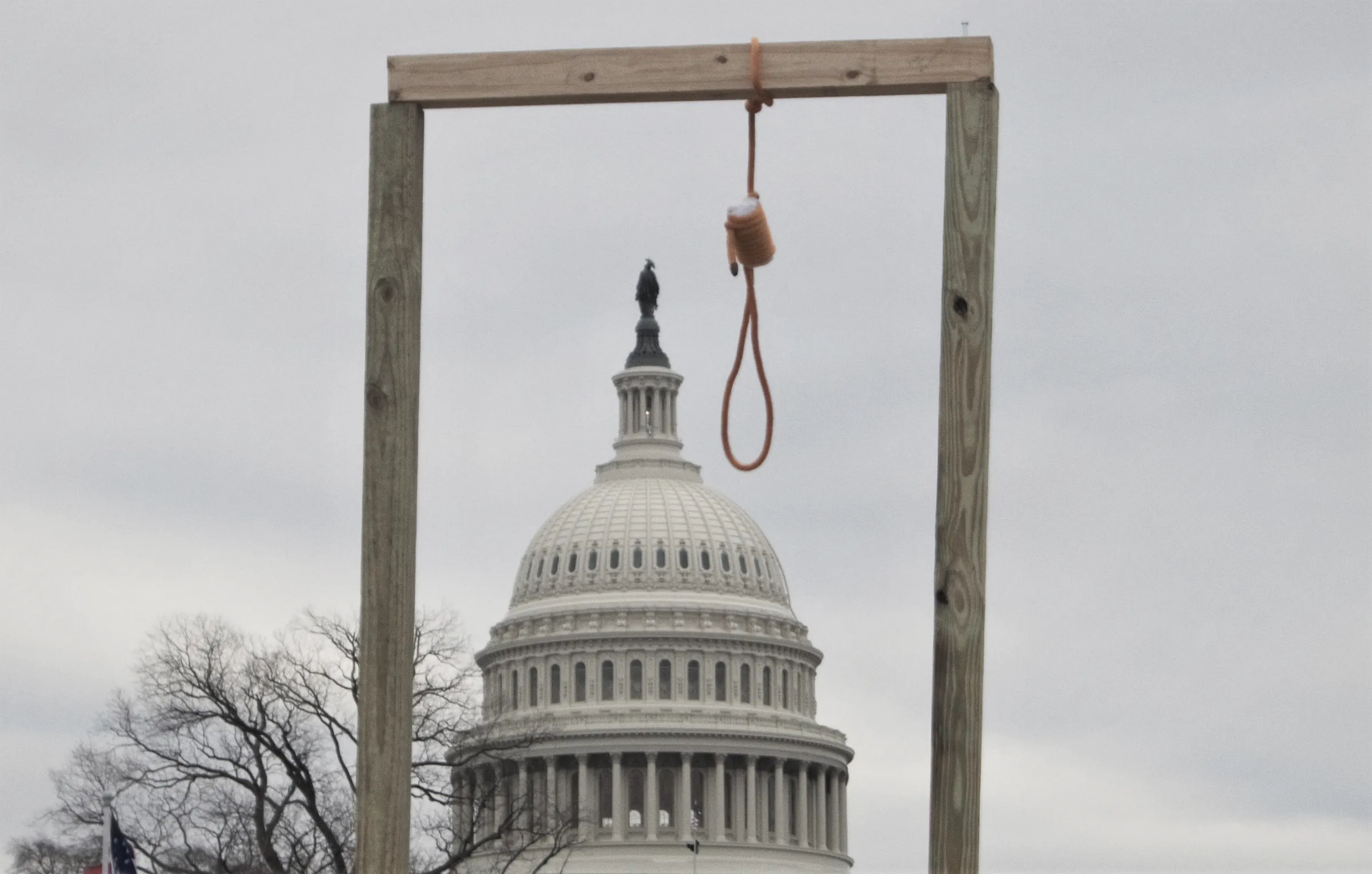
Joe Biden won the presidential election of November 2020. Donald Trump, the sitting president, did not accept the result. Over the next two months he and his allies pressed state officials to change their counts, organised slates of electors in states he had lost, and pushed the Justice Department and Vice President Mike Pence to stop the result being certified. On 6 January 2021, the day Congress met to certify it, a crowd of his supporters broke into the Capitol.
In November 2022 the Attorney General appointed Jack Smith as Special Counsel to investigate. A grand jury indicted Trump on four felony counts in August 2023. In July 2024 the Supreme Court held that a president is immune from prosecution for some official acts, and the charges were narrowed. Then Trump won the November 2024 election. The Justice Department's long-standing view is that a sitting president cannot be prosecuted, so the case was dismissed.
Smith delivered this volume to the Attorney General on 7 January 2025, two weeks before Trump's second inauguration, and it was made public days later. It is the prosecution's case in the prosecutors' own words, never tested at trial. Trump's lawyers argued that it should not be released and that it violates the presumption of innocence; their letter is printed at the end of the report.
What it found
-
The Special Counsel concluded the evidence was enough to convict. The case was dropped only because Trump was about to become President again. p. 137 p. 136
“Indeed, but for Mr. Trump's election and imminent return to the Presidency, the Office assessed that the admissible evidence was sufficient to obtain and sustain a conviction at trial.”
p. 137 · Read in context → -
Trump was told, by his own officials, advisors, state officials and the courts, that there was no fraud that could have changed the result. The report finds he knew he had lost. p. 2 p. 4 p. 39
“Finally, at times, Mr. Trump made comments implicitly acknowledging that he knew he had lost the election. For example, in a January 3, 2021 Oval Office meeting regarding a national security matter, Mr. Trump stated in part, "[I]t's too late for us. We're going to give that to the next guy," meaning President-elect Biden.”
p. 4 · Read in context → -
He pressed state officials to set aside the vote count, only in states he had lost and only officials of his own party. p. 8 p. 9
“On January 2, 2021, just days before the election results were to be certified, he called Georgia's Secretary of State and pressed him to "find 11,780 votes"-Mr. Biden's margin of victory in the state.”
p. 9 · Read in context → -
Slates of electors were organised in seven states he had lost, and many of those electors were misled about how their certificates would be used. p. 11 p. 13
-
He tried to put a compliant official in charge of the Justice Department, backing down only when warned of mass resignations. p. 17 p. 19
-
He pressed Vice President Pence, day after day, to set aside legitimate electoral votes, then turned the crowd against him on January 6. p. 20 p. 30
“Then, at 2:24 p.m., sitting alone, Mr. Trump issued a Tweet attacking Mr. Pence and fueling the riot: "Mike Pence didn't have the courage to do what should have been done to protect our Country and our Constitution, giving States a chance to certify a corrected set of facts, not the fraudulent or inaccurate ones which they were asked to previously certify. USA demands the truth!"”
p. 30 · Read in context → -
His public attacks on officials, election workers and, later, witnesses were followed again and again by threats against them. p. 112 p. 76 p. 113
Where to start reading
Short on time? These sections carry the report's argument. Each opens at the start of the section.
-
The results of the investigation
p. 3 · Read →
The whole case in a few pages — what the Special Counsel says happened, and who the six unnamed co-conspirators were.
“In service of these efforts, Mr. Trump worked with other people to achieve a common plan: to overturn the election results and perpetuate himself in office.”
p. 2 · Read in context → -
Mr. Trump's Pressure on State Officials
p. 9 · Read →
The calls to Arizona, Georgia and Michigan, and what the officials on the other end told him.
“Co-Conspirator 1 not only failed to ever provide such evidence, but he conceded to the Arizona Speaker at an in-person meeting a week later that "[w]e don't have the evidence, but we have lots of theories."”
p. 9 · Read in context → -
Mr. Trump's Fraudulent Elector Plan
p. 12 · Read →
How electors were organised in seven states he lost, from the planning memos to December 14.
“Two and a half hours later, he replied to his own email and, as cover, wrote that "'alternative' votes is probably a better term than 'fake' votes"”
p. 13 · Read in context → -
Mr. Trump's Supporters Attack the United States Capitol
p. 24 · Read →
January 6 hour by hour — the Ellipse speech, the march, and the afternoon in the White House dining room.
“Throughout the afternoon, crowds at the Capitol hunted for Mr. Pence and other lawmakers, with some chanting, "Hang Mike Pence!"”
p. 30 · Read in context → -
Prosecuting Mr. Trump Served Multiple Substantial Federal Interests
p. 70 · Read →
Why prosecute a former president at all — the prosecutors' argument, including what the police at the Capitol went through.
-
Mr. Trump's Conduct Had No Historical Analogue
p. 91 · Read →
Why this was not like the disputed elections of 1876, 1960 or 2000.
“Mr. Trump was "not being prosecuted for publicly contesting the results of the election; he is being prosecuted for knowingly making false statements in furtherance of a criminal conspiracy and for obstruction of election certification proceedings."”
p. 92 · Read in context →
Contents
- DELIVERY BY HAND Read →
- THE CERTIFICATION OF THE ELECTORAL COLLEGE VOTE Read →
- VOLUME ONE: THE ELECTION CASE Read →
- THE RESULTS OF THE INVESTIGATION Read →
- Mr. Trump's Pressure on State Officials Read →
- Mr. Trump's Fraudulent Elector Plan Read →
- Mr. Trump's Misuse of Official Power Through the Justice Department Read →
- Mr. Trump's Pressure on the Vice President Read →
- Mr. Trump's Supporters Attack the United States Capitol Read →
- THE LAW Read →
- Conspiracy to Defraud the United States (18 U.S.C. § 371) Read →
- Conspiracy Against Rights (18 U.S.C. § 241) Read →
- Other Charges Read →
- Prosecuting Mr. Trump Served Multiple Substantial Federal Interests Read →
- There Was No Adequate Non-Criminal Alternative to Prosecution Read →
- Mr. Trump's Conduct Had No Historical Analogue Read →
- The Investigative Process Read →
- The Department's Election Year Sensitivities Policy Read →
- Post-Indictment Procedures Read →
- The Twitter/X Search Warrant Read →
- Legislative Privilege Under the Speech or Debate Clause Read →
- Threats and Harassment of Witnesses Read →
- Mr. Trump's Claims of Executive Privilege Read →
- Prosecutorial Decisions During the Charging Stage Read →
- Immunity Litigation Read →
- APPENDIX: KEY FILINGS IN SIGNIFICANT LITIGATION DISTRICT COURT CRIMINAL LITIGATION Read →
- TWITTER SEARCH WARRANT LITIGATION Read →
- PLL C TODD BLANCHE Read →
- Preparation And Release Of A Report Would Violate Existing Law Read →
- Smith's Report Violates The Presumption of Innocence Read →
- Preparation And Release Of A Report Would Serve No Valid Purpose Read →
- DELIVERY BY HAND Read →
- Notes not linked in the text Read →