Changelog
What has changed.
2026-10-25 — The Southport Inquiry's Phase 1 report, Volume 1
¶The Southport Inquiry's Phase 1 report, Volume 1 (HC 1768-I, April 2026), on the murder of three children at a dance class in Southport on 29 July 2024 and the events leading to it, is on the site: 260 printed pages, 696 numbered paragraphs and 641 notes, each linked, rebuilt from the Inquiry's accessible edition and checked against its PDF. It opens with our introduction: what Volume 1 covers, eight of its findings with the paragraphs behind them, and where to start reading. The photograph on the landing page is Liverpool Town Hall. The report anonymises child survivors under a Restriction Order, and nothing here adds to what it prints. Volume 2, on the roles of the agencies, comes later.
2026-10-25 — The Thirlwall Inquiry's summary report
¶The Thirlwall Inquiry's summary report (September 2026), on events at the Countess of Chester Hospital from 2015 to 2018, is on the site: 76 pages, 433 numbered paragraphs, each with its own link, rebuilt from the Inquiry's accessible PDF. It opens with our introduction: what the Inquiry covered and what it did not, eight of its findings with the paragraphs behind them, and where to start reading. The three full volumes, with the 17 recommendations, come later.
2026-10-25 — The Litvinenko Inquiry's sub-headings are headings
¶In the Litvinenko Inquiry's report, about 180 printed sub-headings ("Treatment in Barnet Hospital", "The Pine Bar") read as one-line paragraphs, Part 5 sat inside Part 4, and five chapter openings had been deleted as page furniture. They are headings again, read from the report's own typography, so each Part and chapter is where the print puts it. Links to a sub-heading's old address lead to the paragraph under it.
2026-10-25 — Leveson's paragraphs are whole again
¶In the Leveson Inquiry's report, about 2,000 paragraphs were cut into fragments: the text on facing pages sits at different distances from the edge, and on one side of every spread each line that began with a capital started a new paragraph ("…I selected" / "Robert Jay QC to be Counsel to the Inquiry…"). Each page is now measured against its own side of the spread, so those paragraphs read and cite as one, and 11 chapters that had lost their opening are now sections of their own. Links to a fragment that is now part of a paragraph lead to that paragraph.
2026-10-25 — An introduction to the Covid Inquiry's Module 2 report
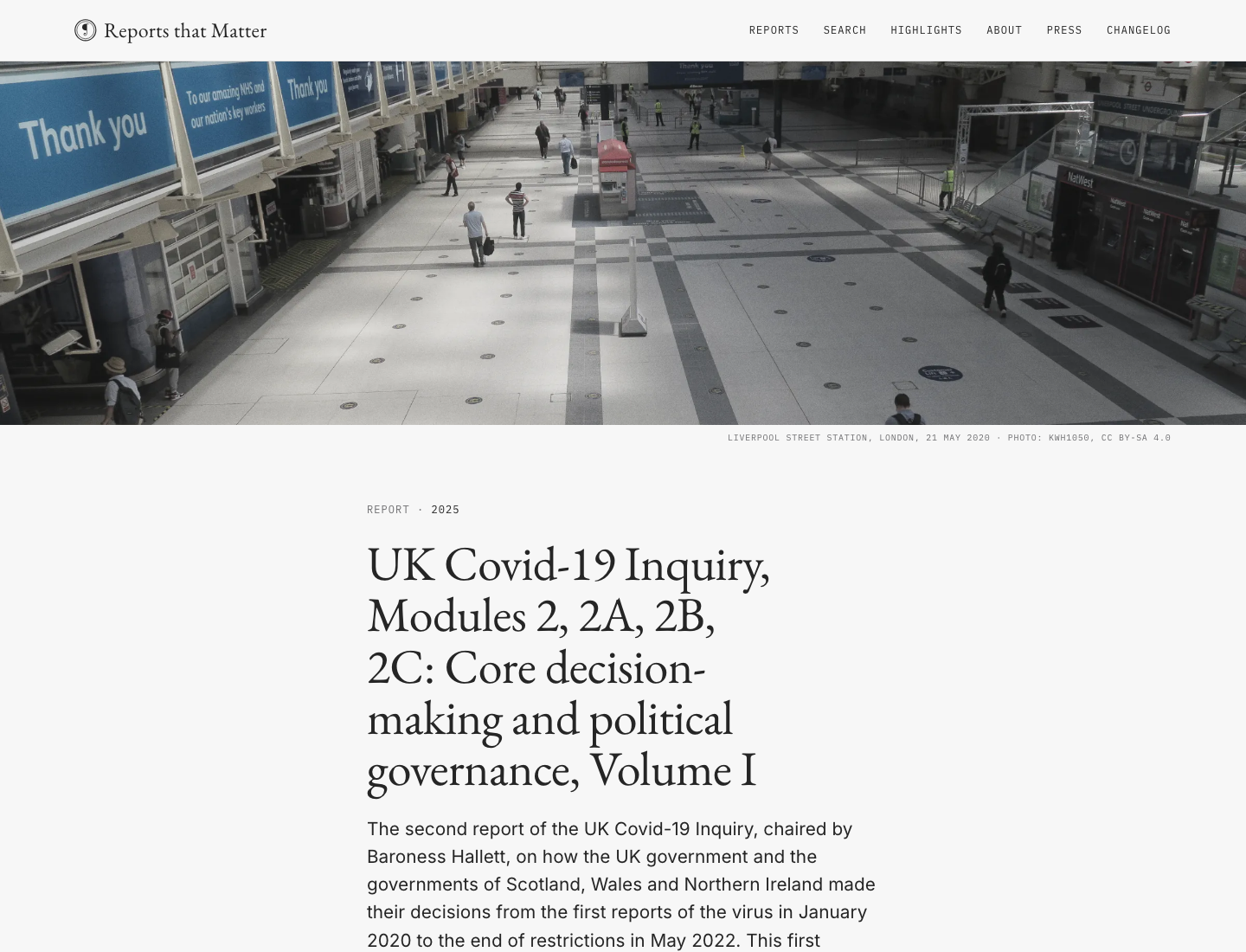
¶The UK Covid-19 Inquiry's report on core decision-making (Volume I, November 2025) now opens with our introduction: what the report covers, how the Inquiry worked, eight of its findings with the paragraphs behind them, and six sections to read first. The landing page shows Liverpool Street Station almost empty on 21 May 2020. The 2017 Intelligence Community Assessment gains a photograph of the CIA's original headquarters.
2026-10-24 — A monthly newsletter, and blog posts that share well
¶You can now sign up for a monthly email from the archive: a few passages worth reading again, sometimes tied to the date or the news, each linked to its place in the report. The form is at the end of the homepage, every report's contents and sections, and the blog; the newsletter page says exactly what we keep (your address, the time and which page you signed up on) and that you will be asked to confirm before the first issue. Every issue will also be a blog post. Blog posts now carry their own share card instead of the site's.
2026-10-24 — Share cards show the report's image beside the quote
2026-10-17 — You can now email us
¶About now leads with contact@reportsthatmatter.org for corrections, removal requests and questions; the GitHub issue form is still there.
2026-10-16 — Where each passage comes from, who to tell, and what the licences are
¶Open a link to a single paragraph and the page now shows where it comes from: the report, the page, a link to the original document, and a route to ask for a correction or removal. About says how to reach us, and that a removal request is answered within a day; the route is a GitHub issue for now, with an email address to follow. About says plainly what AI does and does not do here: the report's words are extracted by code, no model writes or rewrites them, and the introductions are AI-assisted and labelled. About sets out the licences: the code is MIT, each report's text keeps the status it has at source, and where we could not confirm a report's status (the Hillsborough report and the Lehman examiner's report) we say so rather than claim one. The post queue also gained its rules: nothing goes out on the dates we keep clear, and reports about affected communities follow a stricter tier.
2026-10-16 — A new host, a mended Senate study, a cleaner launch queue (ingest v0.28.0)
¶The site now runs on a new hosting account, with the apex, www and old. addresses unchanged. The Senate Torture Report's paragraphs that the page breaks had cut in two are rejoined: severed paragraphs fall from 57 to 24 and paragraphs split into quotes from 101 to 23, with no words changed (ingest v0.28.0 also checks every report for stray control characters). Ahead of launch, the Bluesky post queue lost the cards that should not go out, the About, Press and report pages link to our Bluesky account, and the launch plan no longer quotes a report count.
2026-10-16 — What readers are highlighting
¶/highlights now shows every visitor what readers have been saving and sharing: the passages, newest first, with their report, section and page, how many times each was highlighted (from two), roughly when, and a link to the exact words. Below them sit the Editor's picks, one passage from each of several reports, so the page is never empty. Nothing about who chose a passage is shown or kept with it, a passage appears about half an hour after it is marked, and the words are always checked against the report first, so the page can only ever quote the report itself. Reports about events with affected communities are left out for now. Your own saved passages have moved to Yours, where you can also turn counting off; About says what we record.
2026-10-16 — A correction about highlights
¶Correction. The 21 August entry on saved highlights said that "none of it is sent to us". That was wrong. Your saved list does stay in your browser, but each time you save a passage, copy its link or quote, or share it, its words, report and paragraph are also sent to us, with no account or cookie and nothing that names you, so we can count which passages readers mark. The /highlights page now says so.
2026-10-10 — The Senate Torture Report (ingest v0.27.0)
¶The Senate Select Committee on Intelligence's Study of the CIA's Detention and Interrogation Program (S. Rept. 113-288: the declassified Executive Summary, findings and conclusions, foreword and the minority views) is now on the site: 55 sections, about 2,350 citable paragraphs, searchable, with its plate, four share cards, an introduction and 14 highlights. It is a scan, so the words are the OCR's: about 270 notes are merged into the note before them, about 84% of note markers are linked, and about 57 paragraphs break mid-sentence. Redactions show inline as "[Redacted]" (9,947 of them), distinct from the report's own "[REDACTED]" substitutions (decision 0020). The processing notes on the report's page list the limits.
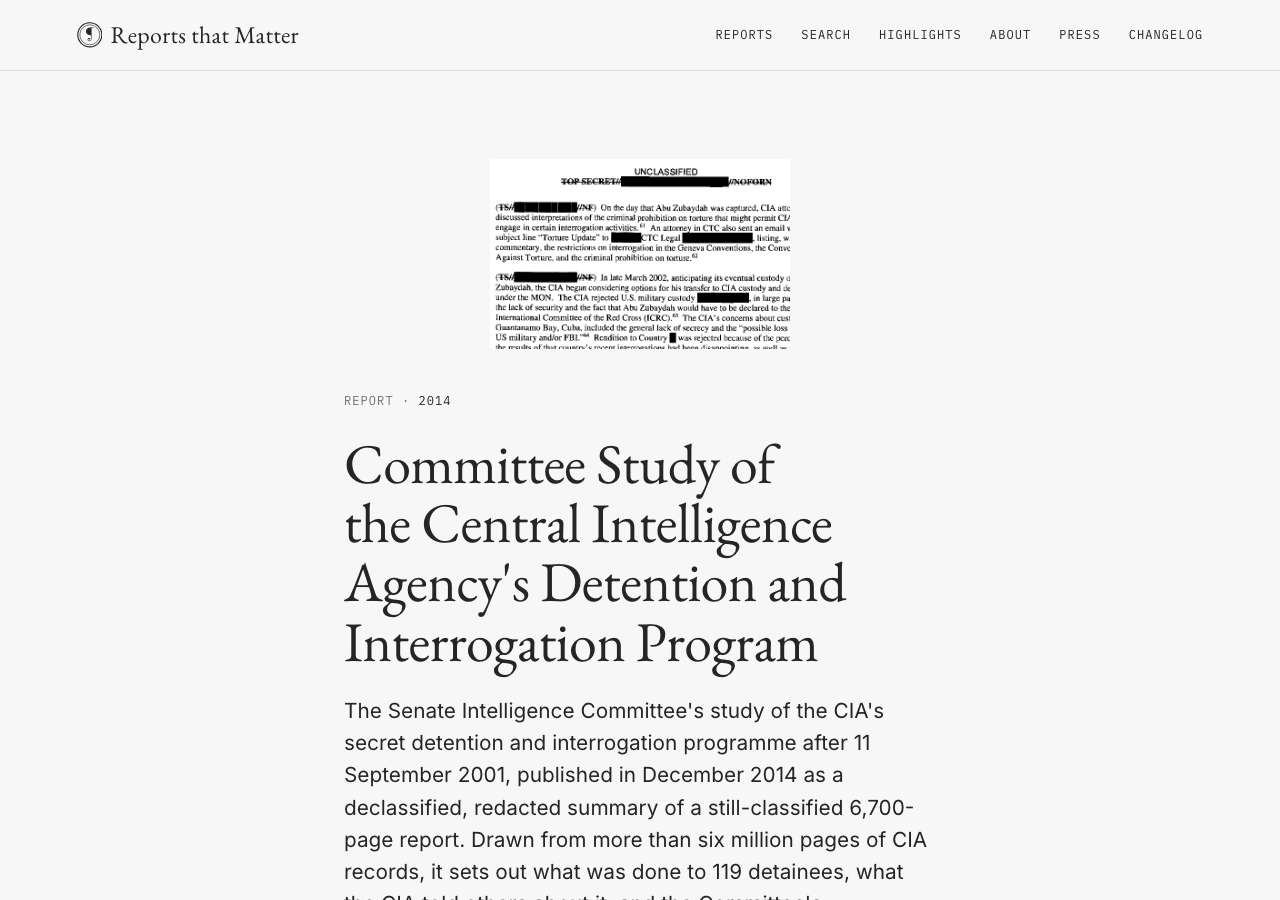
¶Full entry, with a redacted section.
2026-10-10 — The Mueller Report, and cleaner Leveson, Columbia and Challenger (ingest v0.26.0)
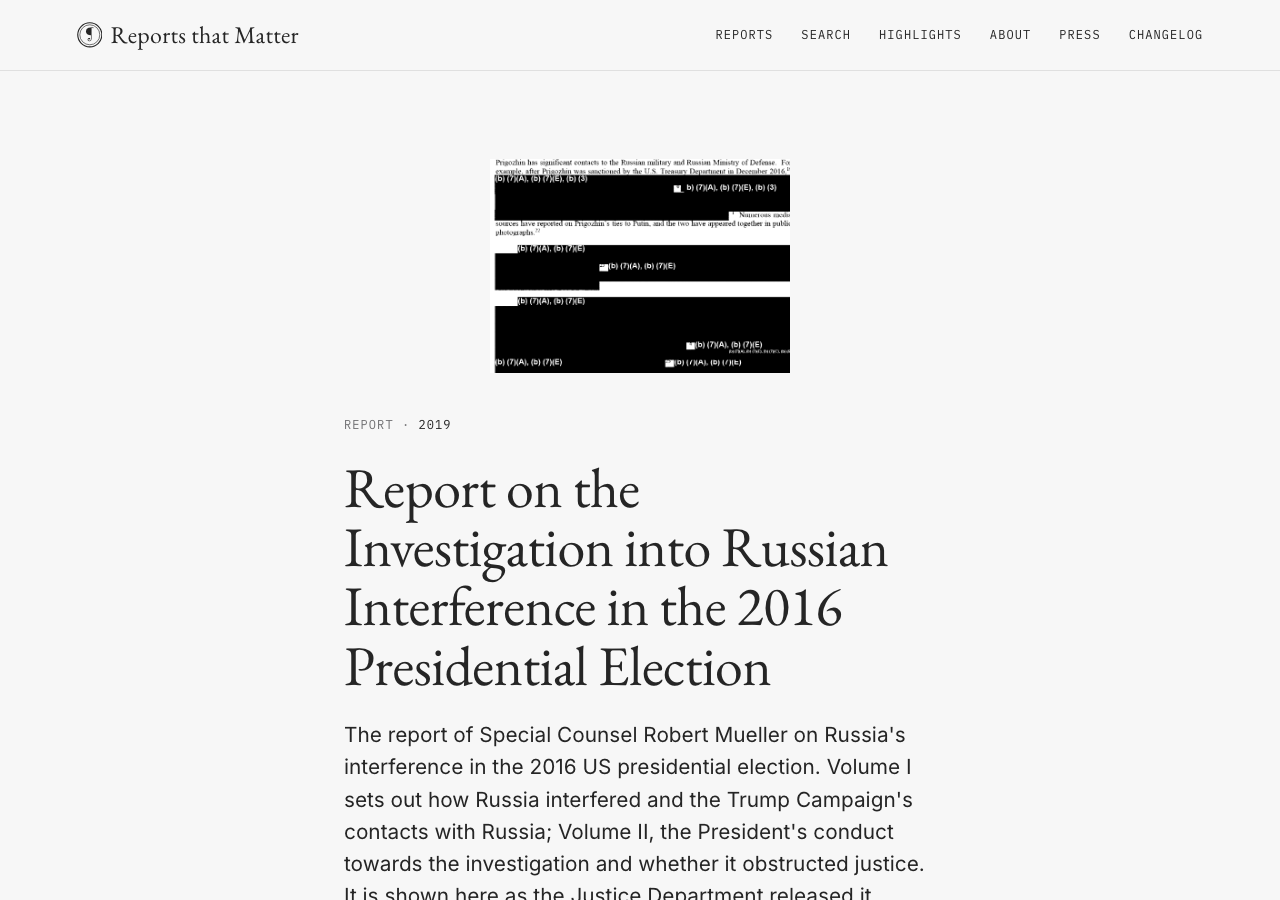
¶The Report on the Investigation into Russian Interference in the 2016 Presidential Election (Special Counsel Robert Mueller, Volumes I and II) is now on the site: 102 sections, 1,315 citable paragraphs, searchable, with its plate, five share cards, an introduction and 11 highlights. Redactions are shown inline as "[Redacted: (b) (7)(A)]" with the codes the box prints (decision 0020). Its 74 scanned pages of Volume I are read by OCR and its processing notes list them; the appendices are not included yet. Leveson loses its running heads and small-caps garble and splits "N.N Second" openers; Columbia and Challenger have about 175 words closed up across line-end hyphens, and Columbia gains speaker turns and Findings and Recommendations headings; Deepwater's chapter 9 list renders as a list; Litvinenko rejoins five cut statute items.
2026-10-10 — Page breaks, floats and a launch audit: nine reports republished, four re-rendered (ingest v0.25.0)
¶Nine reports changed text. Numbered paragraphs that a page break had split are whole again in the Post Office Horizon Inquiry (6 joins), Grenfell (2) and Chilcot (1). The Jack Smith report loses the Blanche letterhead footer that had cut two paragraphs in half, 9/11 now prints box floats in page order, and the January 6th report sets captions in italics and nests its appendix parts one level deeper. The Lehman examiner (31 new paragraph ids), the Senate PSI report (about 100 subheads, 32 ids) and United States v. Philip Morris (notes 7 to 58 defined) have their burn-down passes applied. Challenger, Columbia, Leveson and Jack Smith keep their text but drop OCR-fragment links and join wrapped URLs: Challenger goes from 11 links to none (all junk), Leveson from 416 to 182. The site gets the launch audit's changes (about copy without commentary, phone header navigation) and /full previews for shared links. Decisions 0015 to 0019 record the choices. No screenshots for this release.
2026-10-04 — The Grenfell Tower Inquiry Phase 2 Report, Volume 1 (ingest v0.24.0)
¶The Grenfell Tower Inquiry Phase 2 report, Volume 1, is now on the site: 843 citable paragraphs, 2,019 linked notes and its plate, searchable, with an approved introduction (Open Government Licence v3.0). The tables and figures are not yet shown, only their captions, and the hero waits. Ingest v0.24.0 adds four opt-in passes (furnitureFaces, typographicHeadings relevel, numberedOpenings, figureFaces) that only Grenfell declares, so the other 15 reports are byte-identical. One report published (about 2.5k index row writes), the other 15 untouched.
2026-10-04 — The January 6th Committee's Final Report
¶The Final Report of the Select Committee to Investigate the January 6th Attack on the United States Capitol (H. Rept. 117-663) is now on the site: 2,283 citable paragraphs in 104 sections, 4,287 linked notes, searchable, with its plate, five share cards and an approved introduction. It is a US government work, in the public domain; the hero image waits. The introduction's background and findings were corrected in review (the first hearing was in July 2021; the Pence and 187-minutes findings now quote the report's own words), and posts and landing excerpts now nest a quotation inside a quotation as single quotes, which also changes Jack Smith's and Litvinenko's landing excerpts from an inner straight " to ‘ ’. One report published (6,851 index row writes), the other 14 untouched.
2026-10-04 — The Post Office Horizon IT Inquiry Report (Volume 1), note order fixed in seven reports, printed page numbers in two (ingest v0.23.0)
¶The Post Office Horizon IT Inquiry Report, Volume 1 is now on the site: 948 citable paragraphs in 18 sections, searchable, with its plate, share cards and an approved introduction (Open Government Licence v3.0; the hero image waits). Notes now follow their paragraphs in Litvinenko, Leveson, Hillsborough, PSI, Lehman and 9/11 (Litvinenko's cipher notes no longer sit in the body: 17 stray paragraphs gone), Challenger and Jack Smith take their page anchors from the printed page numbers (Jack Smith's Blanche-letter "January 6, 2025 / Page N" running heads are no longer paragraphs; Challenger's folio debris is gone), the Saville Inquiry's three "Strand Road/ Infirmary" spacing slips are fixed, and Litvinenko and Challenger regain six section pages that a divider had swallowed (for example o-rings-and-putty). Ten reports were republished in one pnpm ship run (about 7.5k row writes); old paragraph links redirect. Behind the scenes: pnpm ingest try --base and pnpm ingest folios, strict pnpm ship flags, an edge-cache key that follows each deploy (a shared ?p= link can no longer show the previous release), and share cards that are pruned and regenerated by the release.
2026-10-04 — Endnotes linked in Deepwater and Columbia, page-break joins across footnotes and captions, Challenger's page structure from vision, and pnpm ship (ingest v0.22.0)
¶Deepwater Horizon's and Columbia's notes are now real endnotes: the Notes appendix is no longer read as body paragraphs, and 1,494 and 305 markers open the right note by chapter. Text that ran over a page break across a footnote, caption or running head now joins in Challenger, Columbia, Jack Smith, Litvinenko, Chilcot, Leveson, Deepwater, Lehman and Philip Morris (one wrong join, Deepwater pp.83 to 84, is filed). Challenger's headings, lists and quotations now come from a per-page vision pass over the 178 pages the text layer cannot structure, with the text layer's own words; Hillsborough's typographic headings are no longer fused into paragraphs; six PDF-only reports have adjudicated page-break references. Known cost: Deepwater loses its 30 Endnotes-appendix page anchors and Columbia one (bead filed). The release itself ran as one resumable command, pnpm ship, after D1's free-tier read limit held it back for about five hours on 2026-10-03: 14,336 row writes, ten reports republished, 163 editor's highlights re-seeded, production verify and the drift table clean.
2026-10-03 — The Hillsborough Report from the Panel's own edition, page stamps inside tables, and markers after quotations (ingest v0.21.0)
¶The Hillsborough Independent Panel's report is now built from the Panel's own website edition, with the pages that edition lacks filled from the PDF: all five checked golden pages match (none did before) and paragraph-break F1 against the edition rose from 76.1% to 87.3%. Its ids moved in about twenty sections, so old paragraph and section links redirect (/chapter-2-the-moment-of now lands on chapter-2-the-moment-of-1989). Printed pages the PDF build left unmarked now carry a page marker in Leveson, Deepwater Horizon, Columbia and PSI, 9/11's page stamps inside Appendix B's table are placed on the right pages, and the roughly 40 Litvinenko footnote markers that followed a closing quotation mark are linked again (41 to 0). Nine reports were re-ingested once, 17,400 search rows were rewritten, and Litvinenko's appendix 10 now redirects to appendix 9, where its short text is folded in. Behind the scenes: pnpm marks check replays every stored reader mark, queued link and editorial quotation against a candidate text before a release (all 164 marks anchor), reader marks follow moved paragraphs, there is an independent page-anchor check in verify, and a scheduled Bluesky poster is in the repository but in dry-run until the account secrets are added.
2026-10-03 — Page breaks, footnote markers, printed paragraph numbers and chapter openings, across all 13 reports (ingest v0.20.0)
¶One release, thirteen reports re-ingested once. Text that ran over a page break now joins in more cases (a list item's run-over, a footnote between a paragraph and its continuation, a scan's stray degree sign). Footnote markers the PDF raises are linked in six more reports (Chilcot's unlinked markers fell from 185 to 0, Leveson's from 6,455 to 101), and printed paragraph numbers ("39.", "1.") no longer turn into lists. 9/11's chapter openings are filed under their own chapter instead of the end of the one before (section links like /11-inside-the-four-flights redirect to /we-have-some-planes), and the Saville Inquiry is now served from its own HTML edition. Paragraph links that moved are mapped, so old shared links still land. Known rough edge: about 40 Litvinenko footnote markers that follow a closing quotation mark show as a bare number (bead filed).
2026-10-03 — The 9/11 Commission Report is now read from the Commission's own HTML edition (ingest v0.19.0)
¶The 9/11 text was recovered from the PDF, which left 34 sentences cut into quotations, 4 paragraphs severed and 14 footnote markers loose. The report is now built from the Commission's HTML edition, which has the words as typeset, while the printed page numbers and the fidelity checks still come from the PDF (the new cleanEdition pass). All of those counts are now 0, and 191 more old paragraph links redirect to their new ids, on top of the 391 already in place.
2026-10-03 — Old paragraph links keep working when paragraphs move
2026-10-02 — Getting the text right: a longer note on the data wrangling behind the archive
¶The defects we kept hitting turning official PDFs into citable text, why fixing them one at a time stopped working, and what we built instead (quality budgets, clean reference editions, a scorer, golden pages) are written up in a longer note: Getting the text right.
2026-10-02 — Paragraphs that ran over a page break are whole again (ingest v0.18.0)
¶A paragraph that continued onto the next printed page used to arrive as two, the second opening on a capital letter, a figure or a quotation mark. The new layoutPageJoins pass checks the page layout (no first-line indent, same typeface) and joins them only when the layout says the text runs on. Thirteen reports declare it and 366 severed openings are healed, from 145 in Philip Morris to 2 in Challenger; paragraph ids move in every one of them, and editorial references to them were updated with the release.
2026-10-02 — Quotations and list items no longer split at page breaks (ingest v0.17.0)
¶A block quotation that ran over a page break used to arrive as two consecutive quotations, the second opening mid-sentence ("This group will be" / "known as the Tobacco Industry Research Committee"). The new quoteListRunOns pass joins them, and a word the break cut ("pro-" / "actively") is closed up. Ten reports declare it: Philip Morris loses 141 split quotations, Leveson 81, PSI 42, Lehman 19, Litvinenko 15, Saville 11, Chilcot 4, and 9/11, Challenger and Jack Smith one each, 316 in all. No paragraph link moves; PSI loses one word. Measured against the reference edition, Philip Morris's page-break join accuracy rises from 73.9% to 82.7%. The release also adds a layout oracle that measures the pipeline's headings, markers and paragraph boundaries against the PDF's own line layout.
2026-10-02 — Footnote markers open the right note (ingest v0.16.0)
¶In reports whose note numbers restart each chapter, one stray marker used to shift every later note onto the wrong chapter's text: 148 markers in the 9/11 Commission Report opened the wrong note, so "Haznawi in 6B." showed a note about Rohan Gunaratna instead of the airline record. Notes are now paired with their markers in reading order, so a stray marker disturbs nothing; the 9/11 chapter 1 date garble is corrected too. Moved: 9/11 (122 markers), Leveson (196), Deepwater Horizon (112), Litvinenko (94), Columbia (7, which gains a "Notes not linked in the text" section) and Lehman (1). Paragraph links are unchanged, except that 9/11's three-paragraph "Foresight—and Hindsight" now sits at the end of the chapter before it rather than on a page of its own.
2026-10-02 — The Lehman introduction now covers Repo 105
¶The Valukas Report's landing page now draws on Volume 3: its Repo 105 findings cite and quote the examiner's own Repo 105 analysis rather than the executive summary's précis of it — what the device was, the $38.6–$50.38 billion it took off the balance sheet at quarter-end, the absence of any business purpose, who was not told, and the claims against Lehman's officers and Ernst & Young — and the reading guide sends readers to the Repo 105 section. Three passages from it are added to the highlights.
2026-10-02 — Text fixes across twelve reports (ingest v0.15.0), and Repo 105 for Lehman
¶The Valukas Report now includes Volume 3, Repo 105 (the accounting-device analysis), as a section of the Lehman Brothers examiner's report, with its footnotes linked: 941 of its 1,094 notes, up from one. @rtm/ingest v0.15.0 carries a batch of fixes that moved most of the archive. Deepwater Horizon regains 279 paragraphs that had been fused into their neighbours, and Challenger 65. Litvinenko loses 241 running titles and tabs that had been set as paragraphs, and its lettered sub-items stop being cut into a quotation (prose run into a quotation: 251 down to 77). Leveson's page-break splits fall from 36 to 5 and its bogus "Chapter 7" section is gone. The Iraq Inquiry has all 88 of its contents-listed headings (68 before). 9/11 gets its contents as entries, 120 sub-headings and 371 endnotes linked that were not. Hillsborough, Saville, Columbia, Philip Morris, PSI and Jack Smith move by a handful of paragraphs each, mostly false footnote links removed. Paragraph ids moved in all of these, so any link into a moved paragraph on those pages may land at the top of its section.
2026-09-28 — An introduction for the Iraq Inquiry, and hero photographs for both
¶The Iraq Inquiry (Chilcot) Executive Summary now has a landing page: a standfirst, background, seven findings with quotations and a six-section reading guide. Both it and the Lehman Brothers examiner's report now carry a hero photograph — a Challenger 2 tank on patrol outside Basra in 2004, and the salvaged Lehman Brothers sign at Christie's in 2010 — sourced and credited in docs/design/2026-09-27-hero/sources.yaml.
2026-09-28 — Chilcot's numbered paragraphs are citable; a citable-density check
¶The Iraq Inquiry Executive Summary numbers its 892 paragraphs "13.", "20."
straight through, at the left margin. Written to Markdown as a bare "20. …",
each one was an ordered-list item to Markdown with no paragraph id: only 64
of 956 citable units on the page could be cited, quoted in the introduction,
highlighted or linked — including every conclusion, such as paragraph 20
("the diplomatic options had not at that stage been exhausted") and
paragraph 432 (the legal basis was "far from satisfactory"). @rtm/ingest
v0.14.1 adds escapeNumberedParagraphs(), an opt-in pass declared only by
Chilcot; Litvinenko, Leveson, Hillsborough and Challenger also number "N."
at the margin but are unaffected. Also new: a corpus-wide check that a
report's paragraph ids per 1,000 words aren't implausibly low, the kind of
check that would have caught this on day one (reportsthatmatter-4qw).
2026-09-28 — An introduction for the Lehman Brothers examiner report
¶The Valukas Report's landing page now opens with a standfirst, background, seven findings with quotations and a four-section reading guide. It covers Volume 1; Repo 105 is summarised from the Executive Summary, and the page says plainly that the full Repo 105 analysis (Volume 3) is coming.
2026-09-28 — A thirteenth report: the Iraq Inquiry (Chilcot); 9/11, PSI, Hillsborough, Challenger and Leveson text fixed
¶The Report of the Iraq Inquiry — Executive Summary (2016), Sir John Chilcot's account of the UK's decision to go to war: 69 of its 88 contents-listed section headings had no heading shape of their own — no capital, number or label — and previously ran straight into the paragraph after them; all are now recovered. Also in @rtm/ingest v0.14.0: the 9/11 Commission's printed Notes appendix now reads as linked endnotes under real chapter headings instead of running-together body text; PSI's footnotes that spill over a whole page no longer print as ordinary paragraphs (17 leaked down to 3); Hillsborough's Parts, Chapters and Appendices are recovered as real structure; Challenger drops its remaining caption and OCR-garble headings; and Leveson's headings ending "CHAPTER n"/"APPENDIX n" keep their number.
2026-09-28 — A twelfth report: the Lehman Brothers examiner (Volume 1)
¶Report of Anton R. Valukas, Examiner (2010), the court-appointed investigation into Lehman Brothers' collapse — scoped to Volume 1 of 9 (196 pages, 690 footnotes): the Introduction, Executive Summary and Procedural Background, and the Examiner's findings on Lehman's business and risk management. The official PDF opens with the whole nine-volume report's table of contents; it's excluded here as out of scope rather than ingested as loose bullet fragments (see the report's own README). The Examiner's "Repo 105" findings — the accounting device Lehman used to understate its leverage before each quarterly report — are in Volume 3, not yet on the site.
2026-09-28 — Page-break sentences, Deepwater's chapters, Philip Morris's findings, and Columbia's structure fixed
¶Four fixes shipped together in @rtm/ingest v0.13.0. Jack Smith: sentences split across a page break — including one a skewed scan had set as a block quotation — are rejoined; the three examples raised on GitHub, "false claims of election fraud", "monitored legal developments regarding" and "claims that they were making", now read as continuous prose. Deepwater Horizon: chapter, part and appendix headings are read from the contents instead of being folded into figure captions or the paragraph below them. United States v. Philip Morris: the opinion's 4,088 numbered Findings of Fact are citable paragraphs rather than an unlinked list, and its headings come from the contents rather than body or footnote text. Columbia: its section structure is read from the contents — fixing the two-column regression that had pinned it to an older pipeline release — and paragraph ids containing an apostrophe-like character (ʼ) resolve again across the archive.
2026-09-27 — A photograph of the event on every landing page
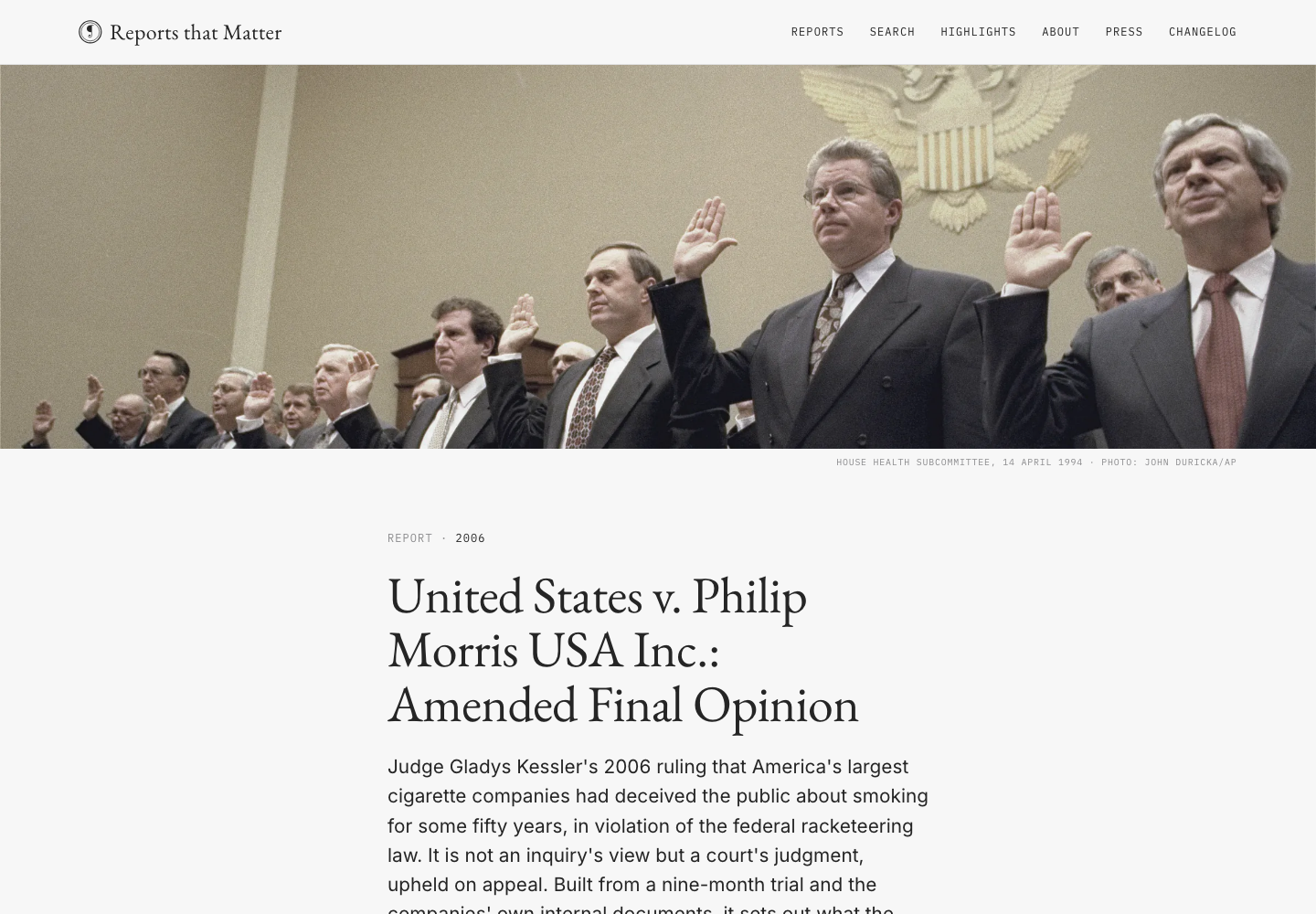
¶The other nine reports now open the way Jack Smith and Hillsborough do, with a photograph of what they are about in a band above the title: the towers burning from Brooklyn, the Challenger plume, Columbia breaking up over Texas, the Deepwater Horizon rig on fire, Lehman Brothers' headquarters on the night it went bankrupt, the seven tobacco chiefs swearing nicotine was not addictive, soldiers at a barricade in Derry on Bloody Sunday, Alexander Litvinenko in hospital in the photograph he asked to be released, and the last News of the World. Five of these replace the first research picks, which showed a place or an object rather than the event. Each carries a credit line linking to its source.
2026-09-27 — Introductions for Challenger, Columbia, Deepwater Horizon and Philip Morris
¶The Challenger, Columbia, Deepwater Horizon and United States v. Philip Morris reports now open on the same landing page as Jack Smith and Wall Street: year, standfirst, background, what the report found (quoted, checked word for word), and where to start reading, all above the contents. Every report in the archive now has an introduction.
2026-09-27 — A photograph of the event on two landing pages
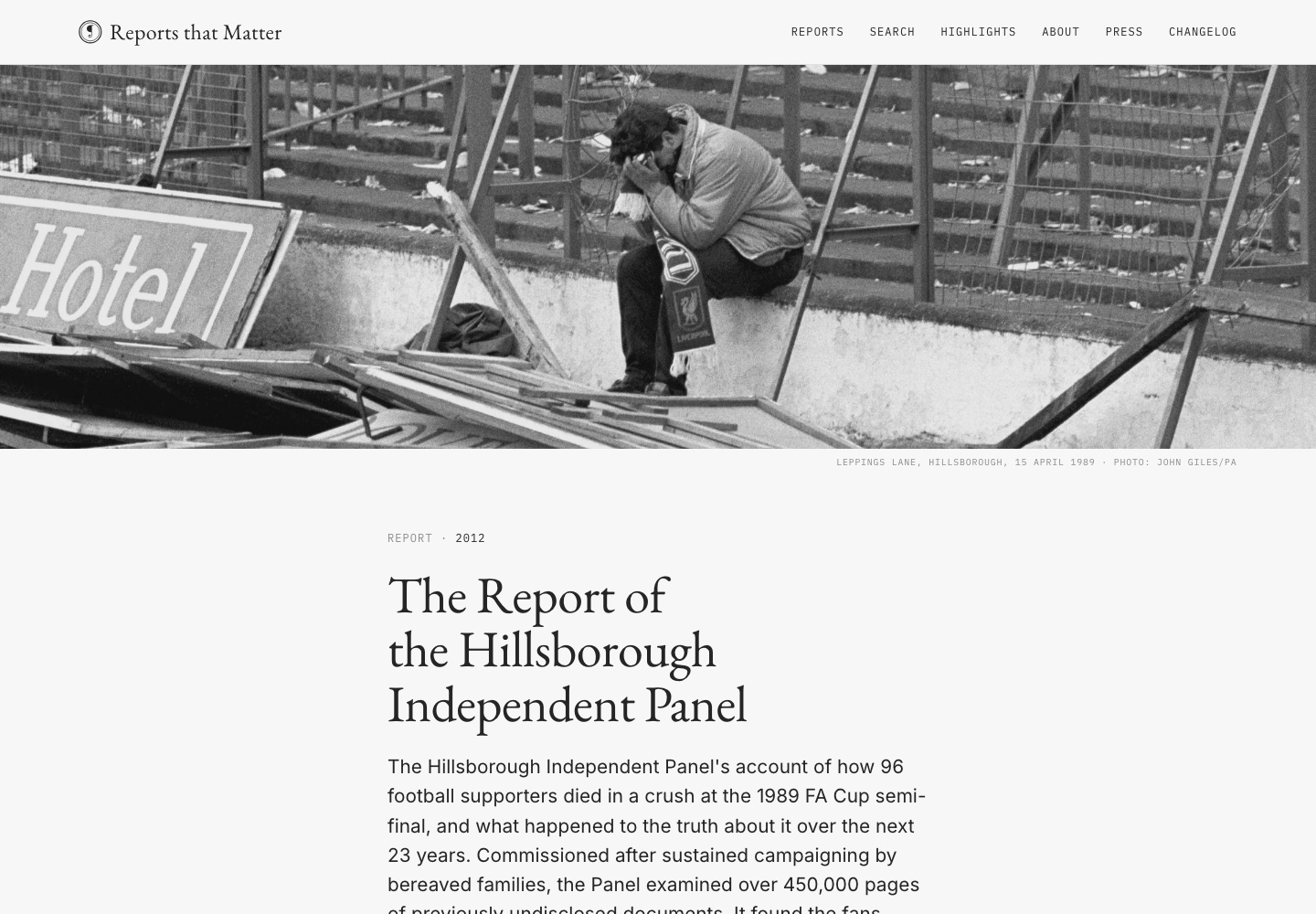
¶The Jack Smith report and the Hillsborough Independent Panel's report now open with a photograph of what they are about, in a full-width band above the title: the gallows the crowd built in front of the Capitol on 6 January 2021, and the Leppings Lane end at Hillsborough on 15 April 1989. The colour is toned down so the photograph sits with the rest of the site, each carries a credit line linking to its source, and on those two pages it takes the place of the report's plate. Every other page is unchanged. This is a pilot: if it holds up, the other reports follow.
¶Before and after, desktop and phone.
2026-09-27 — The 9/11 Commission Report's sections, and its chapter 11 notes, restored
¶Every numbered section of the 9/11 Commission Report is now its own section, titled as the report's contents titles it: "8.1 The Summer of Threat" rather than "THE SYSTEM WAS BLINKING RED" 8.1 THE SUMMER OF THREAT fused into one capitals heading. Six sections the text had lost into the paragraph below them are back, among them "9.2 September 11, 2001", "8.2 Late Leads—Mihdhar, Moussaoui, and KSM" and "11.2 Policy"; the contents now lists all 55. The report's notes are endnotes, but its notes pages were being read for footnotes, which produced five notes that nothing in the text pointed to; chapter 11's first thirteen notes had disappeared into one of them. They are back in the Notes under "11 Foresight—and Hindsight".
2026-09-27 — Wall Street's contents list only real sections
¶Quoted exhibits in Wall Street and the Financial Crisis — an awards-night script, an S&P memo header, a sales-goals slide — were being read as section headings in its contents. They no longer are, and the numbered findings that follow them, "Conflict Between Client Interests and Proprietary Trading in 2007", "Failing to Disclose Key Information to Investors", among them, read as their own paragraphs again instead of being swallowed into a caption's heading.
2026-09-26 — Fewer stray note links across seven reports; Wall Street's missing notes restored
¶In Wall Street and the Financial Crisis, a note whose text began with a number ("2009 OTS Annual Report…", "12 U.S.C. § 1820") was read as a new note with that number. That left 25 notes defined twice and threw the note count off, so on later pages the notes weren't found and printed as body text. The count now holds: no note is defined twice, and notes such as 65, 91–93 and 604–609 are back in the margin. Across the archive, numbers that aren't note markers are no longer linked as notes: case citations ("265 U.S. 182, 188"), years after a date ("May 3, 1991"), counts ("2008, 119 years to the day"), document numbers, and lists ("paragraphs 17, 19, 20 and 21"). That removed about 60 false links in Philip Morris, 70 in Deepwater Horizon and 35 each in Jack Smith and Leveson, and 21 Philip Morris notes that were printed as body text are notes again. About 17 Wall Street notes long enough to fill a whole page still print in the body; that is next.
2026-09-25 — Footnotes stay in the margin in the Jack Smith and Wall Street reports
¶In the Jack Smith report, a footnote that ran over a page break, or whose first line the PDF set above its own number, landed in the text as a block of raw citations. That happened twelve times, splitting five paragraphs mid-sentence, including one the landing page links to ("…the co-conspirators deliberately / [citations] / withheld from the elector nominees…"). Those citations are now back in their notes, and the paragraphs are whole. In Wall Street and the Financial Crisis, page numbers on the contents page and the count in "75 out of 75" were being read as note markers. Because each number's notes are matched in order, that gave later notes the wrong text: the Executive Summary's first note showed an unrelated Goldman Sachs note. The same contents-page fix corrects the Challenger and Philip Morris reports.
2026-09-25 — Reports open on a page about the report
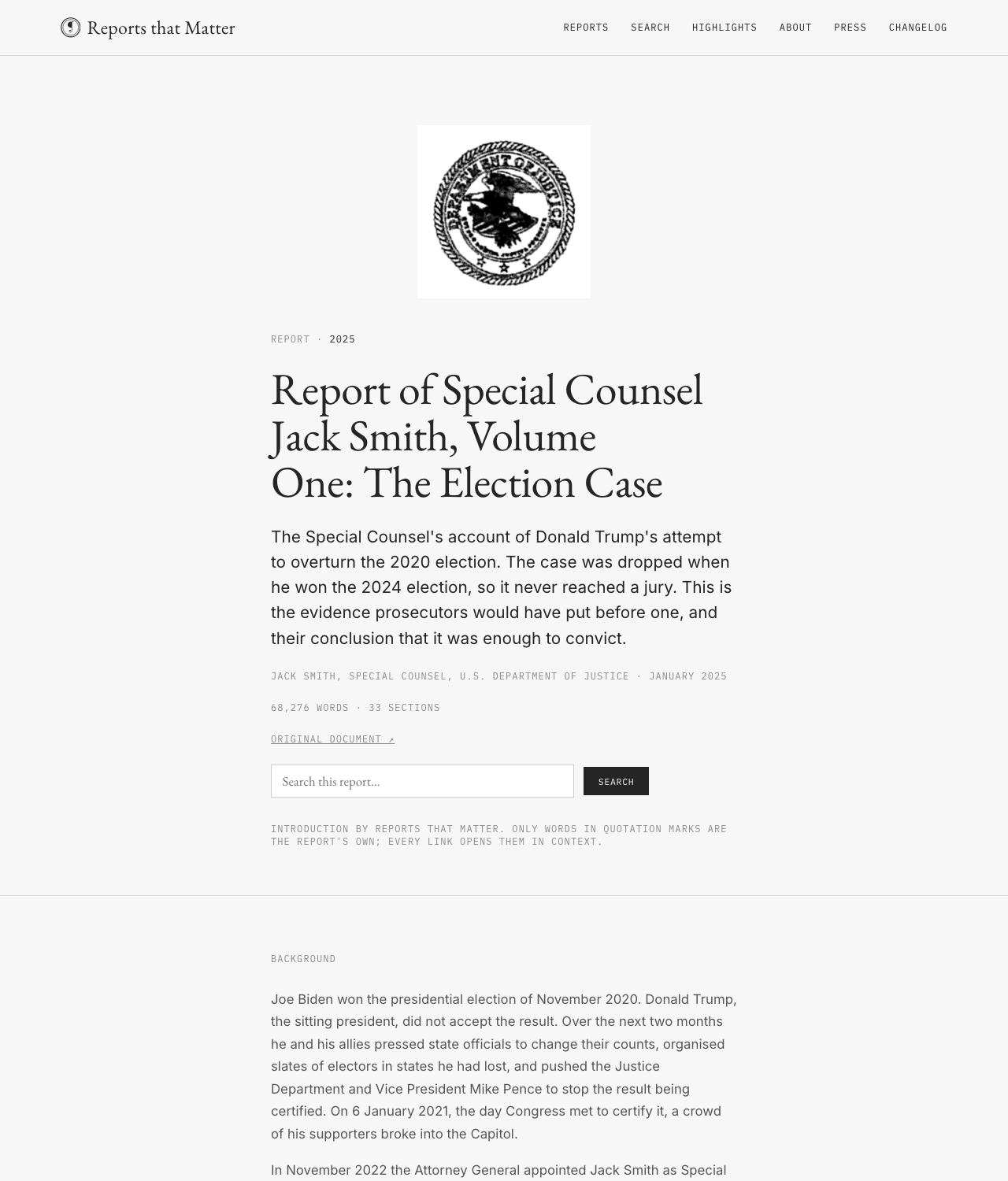
¶The Jack Smith report and Wall Street and the Financial Crisis now open on a landing page instead of bare contents. It gives the year, a short account of what the report was about and why it matters, what it found with a few key passages quoted, and the sections to read first, all above the contents. Our introduction is marked as ours: only words in quotation marks are the report's, every one is checked word for word against the text, and each link opens it in context. The year a report was published now leads its row in the archive and sits in every report header.
2026-09-20 — Each report can say how its text was made
¶A report can now carry its own page, "About this edition", linked from its contents: where the text came from, what the pipeline had to do to read it, and the places where it still differs from the printed page. The Bloody Sunday Inquiry has the first one. It lists what was fixed (1,439 of 1,451 notes linked to their paragraphs, 157 subsection headings recovered) and what was not: about 50 paragraphs split at a page break, roughly 140 that end mid-sentence because of map labels, twelve notes whose marker is missing from the PDF. The other reports show no such link until they have one.
2026-09-18 — The Bloody Sunday Inquiry is published
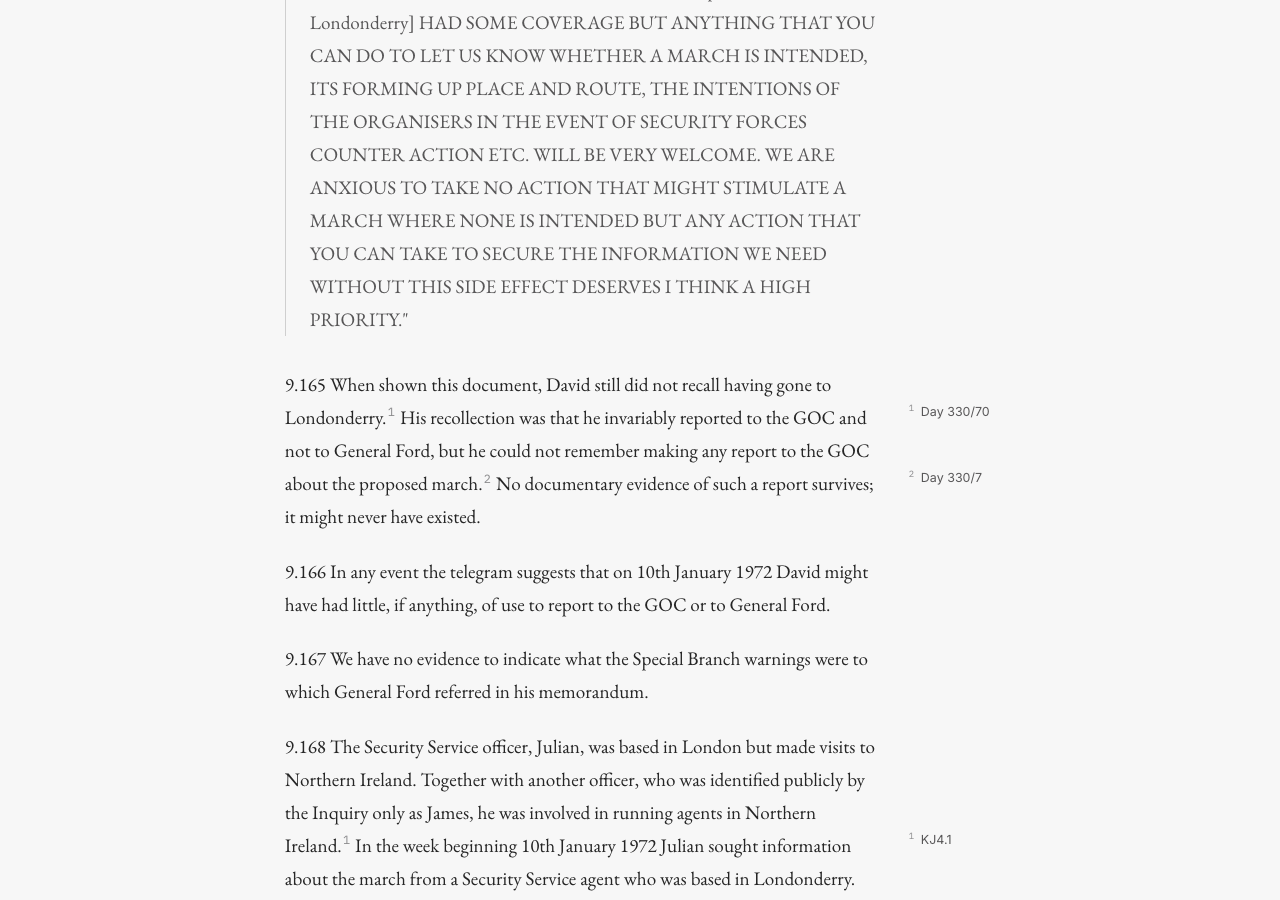
¶Lord Saville's report into the killings in Derry on 30 January 1972 is now in the archive: Volume I, the Principal Conclusions and Overall Assessment and the background chapters, nine chapters and 1,451 notes. Its notes sit beneath each paragraph and restart at 1 every time, so the pipeline now reads them where they are printed and links each to its own paragraph. Before, 392 references pointed at a single note. The telegrams and orders it quotes in capitals stay quotations instead of breaking into headings, and each chapter's own contents list names its 157 subsections.
2026-09-18 — 18 Challenger scan errors leave the review queue
¶The first prose batch in the Challenger report's remaining OCR queue has been checked against the GPO scan. Twenty-five page-scoped corrections restore damaged footnote numbers and definitions, the SRM O-ring Task Force title, and a table heading; 18 suspect tokens are now resolved rather than left for another reviewer.
2026-09-14 — A logo in the navbar, a press page, and two plates replaced
¶The pilcrow mark is back beside the site's name in the header — a plainer, unlettered version of the seal than the one dropped from there the day before, already proven legible at favicon size. A new /press page carries the logo, the logotype, and the two together, in the sizes the site itself ships.
¶Two of the ten reports' plates read poorly and are replaced. Columbia's showed an unrecognisable dark shape rather than anything identifiable as the report; it's now the shuttle stack in the Vehicle Assembly Building door, the same subject as a distinct candidate held from the earlier work. Challenger's report has no photographs anywhere in its own PDF — its plate was a hand-drawn diagram, same as the rejected direction for the mark beside it — so its plate now comes from NASA's own photograph of the smoke at the right booster's joint at liftoff, the evidence the Rogers Commission used to locate the failure.

2026-09-13 — Every report gets a picture of its own evidence
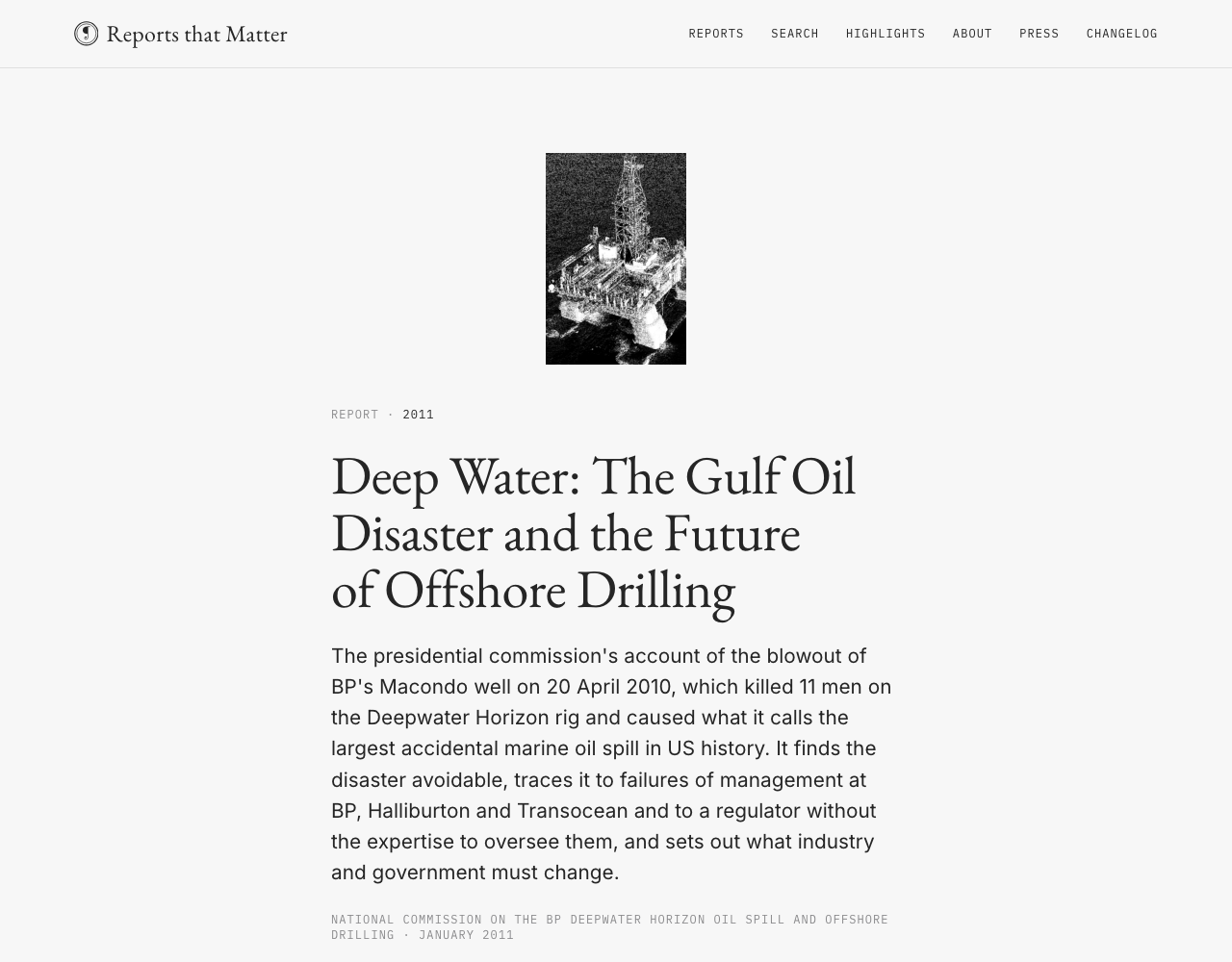
¶Each of the ten reports now carries a plate: one image, drawn wherever possible from the report's own pages, and chosen to show the thing the inquiry turned on rather than the harm it investigated. The hole punched through Columbia's wing panel in the foam test. The polonium readings table by table in the Pine Bar. The stairwell deviation that failed the North Tower's evacuation. It sits beside each title in the archive, above the title on the report's own page, and on every share card, all in one grain so the ten read as a set.
¶The site's logo changes with it. The seal beside the name had 26 letters wrapped around a 30-pixel circle, so it only ever read as a smudge; the header is now the name alone. The browser-tab icon becomes a pilcrow (¶), the mark for a paragraph, set in the seal.
2026-09-12 — 166 wrong links stop pretending to be citations
¶Turning scanned text into a web page means guessing which fragments are web addresses. That guess was wrong far more than it looked: a dropped space at the end of a sentence, immediately before a short capitalised word, was routinely read as a link — "flight.At 8:46 it happened" became a live link to ".at", Austria's domain suffix, not a citation to anything. 155 of the 166 were exactly this, concentrated in the 9/11 Commission Report; the rest were short scanning errors that happened to end in a real country code.
¶Every one is now plain text again, and nothing that was a real link was
touched — Leveson's own 94 citations to its own website, and every
guardian.co.uk, FT.com, and similar bare citation elsewhere, still
click through exactly as before.
2026-09-12 — 2,058 numbered paragraphs stop running into each other
¶A reader flagged it directly: in the Litvinenko Inquiry, paragraph 3.77 was printing as the tail end of 3.76's paragraph, not its own. The cause was the numbering itself — "3.77" prints flush against the margin, the same column an ordinary line of running text sits at, so nothing told the scan apart a genuine new paragraph from a line that just continues the one above. Wherever the page also happened to carry no blank line between paragraphs — common in the Litvinenko Inquiry, Leveson Inquiry, and Hillsborough Panel report, all three of which number this way — several numbered paragraphs in a row could run together into one.
¶The numbering is now read as what it is: Leveson gains 1,818 paragraphs back, Litvinenko 150, Hillsborough 90 — 2,058 in total, all previously fused into a neighbour. Nothing is reworded; every word is exactly where it was, just correctly split.
¶Read the corrected paragraph.
2026-09-11 — 210 of Challenger's Findings and Recommendations get their own paragraph back
¶The Committee's report structures every issue it investigated the same way — a question, a Finding, a Recommendation — but the label marking each one printed flush against the margin with nothing to set it apart from ordinary body text. The scan read it as part of whichever sentence came right before it: "...without certification and approval. Recommendations" looked like one run-on thought, and the numbered list that actually answered "Recommendations" followed as if unrelated. 214 of these labels were affected; 210 are now their own paragraph, exactly as printed.
2026-09-11 — Footnote markers stop landing on dates and phone numbers
¶A handful of ordinary numbers in the prose were being turned into footnote links by mistake, because the linker only checked whether a number matched some footnote somewhere in the document — and a report with thousands of footnotes has almost every number 1–999 as some footnote's number. A date like "11, and 19 March 2003" had 11 and 19 turned into citations for unrelated footnotes; a repeated "Telephone orders: 020 7219 3890" block did the same to its digits. Both are now recognised and left alone. Six reports had at least one of these; Leveson and Hillsborough had the most.
¶Checking why Hillsborough's sidenotes stopped rendering after this fix turned up a separate, pre-existing gap: its citations are a numbered list, not superscript markers, and a handful of list fragments were being misread as footnote definitions that were never real notes. That's now tracked on its own rather than papered over.
2026-09-11 — Footnotes stop showing someone else's citation
¶When two different footnotes happened to share the same printed number — a report restarting its numbering per chapter, or a scan simply misreading a footnote's digits — the pipeline treated them as the same note. Every reference to that number showed whichever one of them won a silent merge, regardless of which note the reference actually pointed at. Fixed at the root: a reference is now resolved against its own note, in the order both were written, not through one shared lookup by number.
¶Seven of ten reports had this to some degree; two are worth naming. Deepwater Horizon was hit hardest — the same 1,226 sidenotes now each show only their own text instead of a merged blob, and the page dropped from 2.07 MB to 1.78 MB with nothing removed, just no longer duplicated. The Leveson Inquiry, which restarts numbering every chapter, had drifted ten pipeline releases behind everything else in the archive; fixing its footnotes meant catching it up, so its recall and heading detection also improved along the way.
¶Read the corrected Deepwater Horizon report.
2026-09-11 — Every page gets a real share-card image
¶Almost the whole site had no og:image — a link shared to Slack, iMessage, or
X previewed as bare text everywhere except five curated quotes in one report.
Every report now has its own default card (title, author, date), the site has
one too, and a shared link always falls back to the most specific card that
exists: a curated quote, then the report's own card, then the site's.
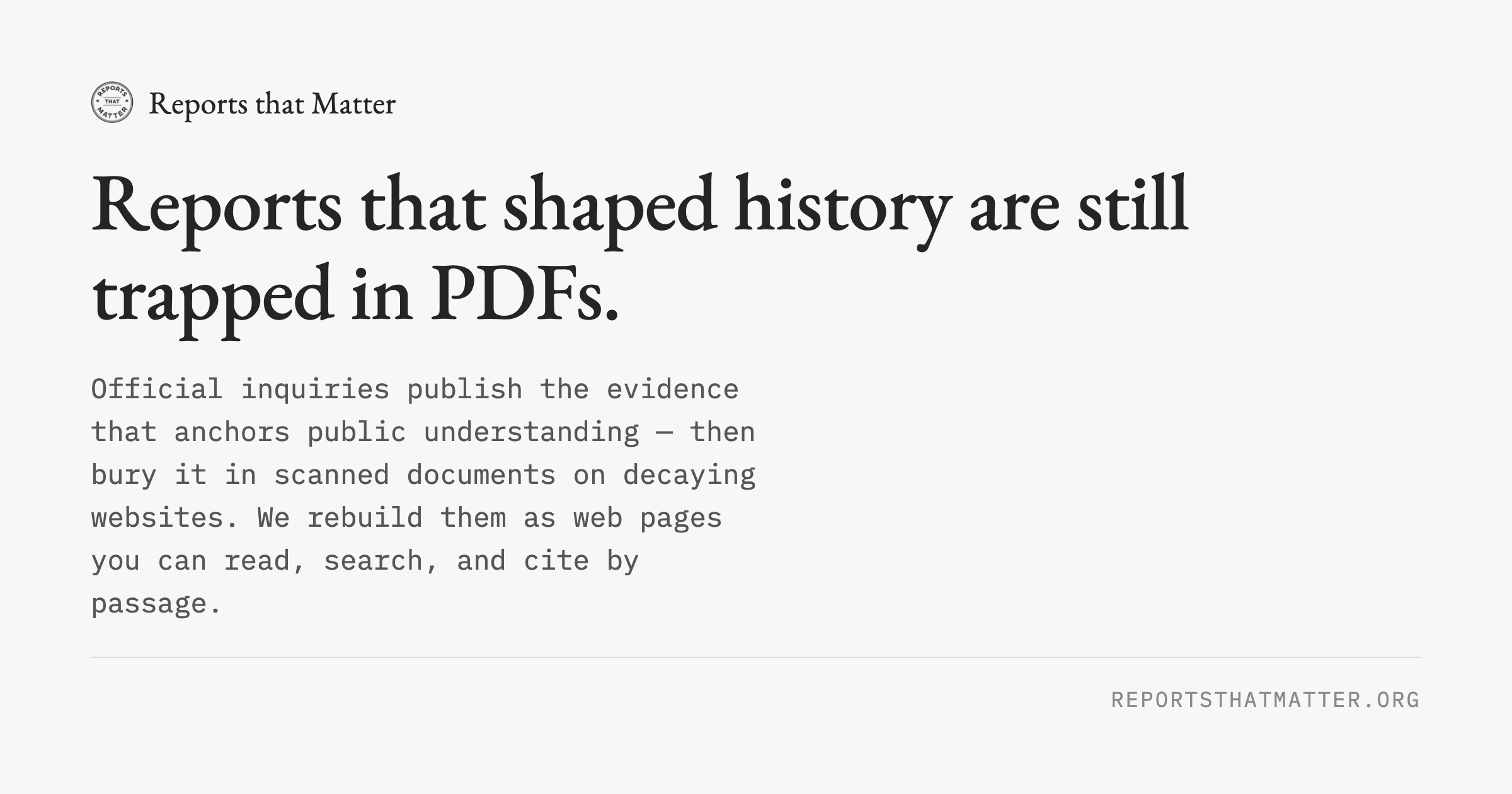
¶Full before/after, including a couple of the new report cards: visual changelog.
2026-09-11 — Challenger's fidelity queue starts moving: 31 scanning slips fixed so far
¶Every report carries a review queue of places its scan might not read right — nearly 1,000 flagged spots across the archive, untouched until now. Challenger's is the largest queue, and it's the first to get a real pass: the Committee's own findings and recommendations, then its footnote citations, checked one by one against the source. 31 scanning errors corrected so far — "Recommendation" headings that had been printing as "Recomrnendation", footnote numbers reconstructed from OCR garble and confirmed against the scanned page images — and dozens more flagged spots checked and confirmed correct as printed. 310 of Challenger's flagged spots remain, mostly in the reproduced memos and equipment tables of its appendices.
2026-09-05 — A report can be republished without redeploying the site
¶Until today, correcting a single line of one report meant rebuilding and redeploying the whole site, and every report's text travelled with the application code. Each report is now stored separately, under a fingerprint of its own contents, and the site is simply told which fingerprint to serve. All ten are live that way.
¶Two things follow from it. Correcting a report is now a change to that report, which is what it always should have been. And because a version is named by its contents, older versions remain exactly where they were — so a citation can point at the precise text it quoted, and putting a correction back is a single instruction rather than a rebuild.
¶Publishing goes through one gate that reads back everything it was given and refuses to point at a version that is missing anything, so a half-finished publish cannot reach a reader. Each report has its own key, which can change that report and nothing else.
2026-09-05 — Paragraph ids get a gate, and pages stop carrying their layout
¶Paragraph ids are permalinks, and they had no guard. Each report's own
baseline covers its markdown, but the ids are made one stage later, by code in
the site repo that no report has a pin on — so a one-word edit there could
repoint every citation in the archive and nothing would notice. pnpm corpus check now fingerprints every section's citable ids across all ten reports and
fails naming the sections that moved. Changing a single number in that code
makes it fail on all ten, which is how we know it works.
¶The pre-rendered files also carried the site's own layout, which meant a styling change rewrote all six hundred of them and a corrected report could not be republished without redeploying the whole site. They now hold the report's text and nothing else, and the page is put together when it is asked for. All 578 pages the site serves are byte-for-byte what they were before — this is a change to where the work happens, not to what anyone reads.
2026-09-04 — The site stops carrying its own output
¶Report pages were pre-rendered into the repository and committed: 133 MB of generated HTML around 2 MB of application code, and 85% of all git history. They are now build output, regenerated in about three seconds and never committed.
¶Along the way, body.json is gone. It held every section of a report's HTML in
one file — 55.5 MB across the archive, 19.0 MB for Leveson alone against a
25 MiB per-file ceiling — and a shared quote link parsed all of it to quote a
single paragraph. A shared link now serves the same static page as the plain
URL with only its <head> swapped, and takes the quoted words from the one
section that holds them. Generated output drops from 133 MB to 77 MB, and the
next report on the list, the Chilcot Inquiry at roughly twice Leveson's length,
stops being blocked by a file-size limit.
¶All 31,918 indexed passages were compared against the previously published search index and are byte-for-byte identical, so nothing about what search finds has changed.
¶This also closes a latent hazard rather than a theoretical one: a documentation
commit six days ago had deleted 413 generated files with no replacement,
leaving main with no page artifacts at all for six of the ten reports.
Deploys upload from disk after a manual pre-render, so the live site was never
affected — but a deploy from a fresh clone would have dropped those six reports
off the site. Build output committed to git can drift from what the build
produces, and this one had.
¶Background and what comes next: content publishing.
2026-09-03 — Four more reports
¶The archive goes from six reports to ten:
-
¶
- The 9/11 Commission Report (2004) — 585 pages. Every page of the PDF carried a leftover typesetting slug ("Final1-4.4pp 7/17/04 9:12 AM Page 13"); it is stripped, and the page number is read back off it so the page anchors still work.
- Deep Water: The Gulf Oil Disaster and the Future of Offshore Drilling (2011) — the BP Deepwater Horizon commission's report to the President, 386 pages, 775 footnotes.
- United States v. Philip Morris (2006) — Judge Kessler's 1,682-page RICO opinion, with its findings of fact numbered and citable one by one.
- The Report of the Hillsborough Independent Panel (2012) — 389 pages; 99.7% of the words retained, the cleanest ingest in the archive. Its section headings are set as colour and weight rather than text, so for now it reads best as one continuous document.
¶Each report keeps its own repository under the reportsthatmatter
organisation, holding the source PDF and the definition it is built from.
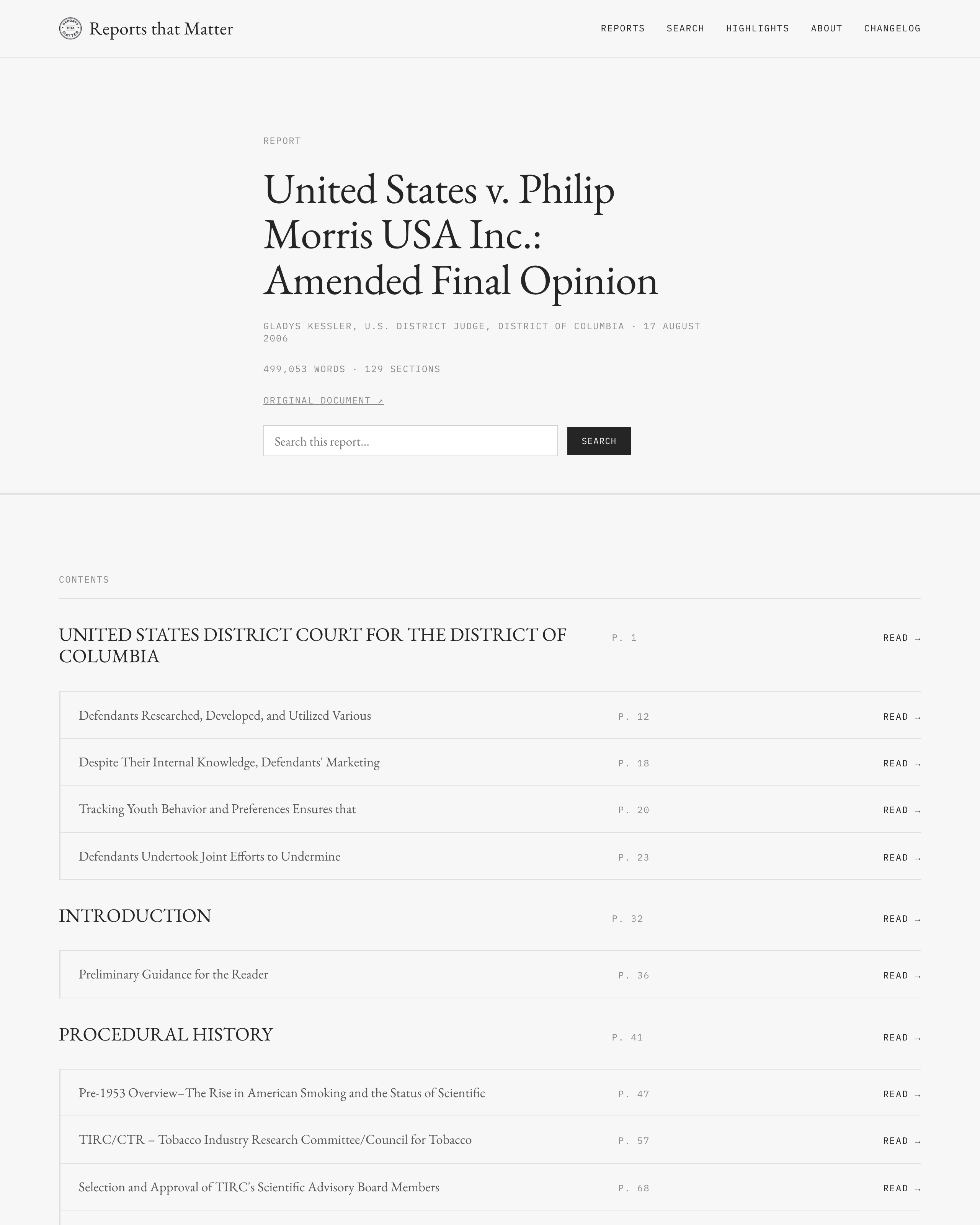
¶Before/after for all four — including where Hillsborough's sectioning falls short — is in the visual changelog.
2026-09-01 — The Litvinenko report stops quoting itself
¶Most of the Litvinenko report's paragraphs were being shown as though they were quotations from somewhere else. The report numbers its paragraphs in the margin and indents the text beside them, and the pipeline read that indent as a quotation — so 865 of its 1,089 paragraphs were cut in half, the first line left as text and the rest set as a quote.
¶Paragraphs are whole again, and the passages that genuinely are quotations — witness evidence, expert statements — still read as quotations.
2026-08-29 — The Columbia report, and words that stopped breaking in half
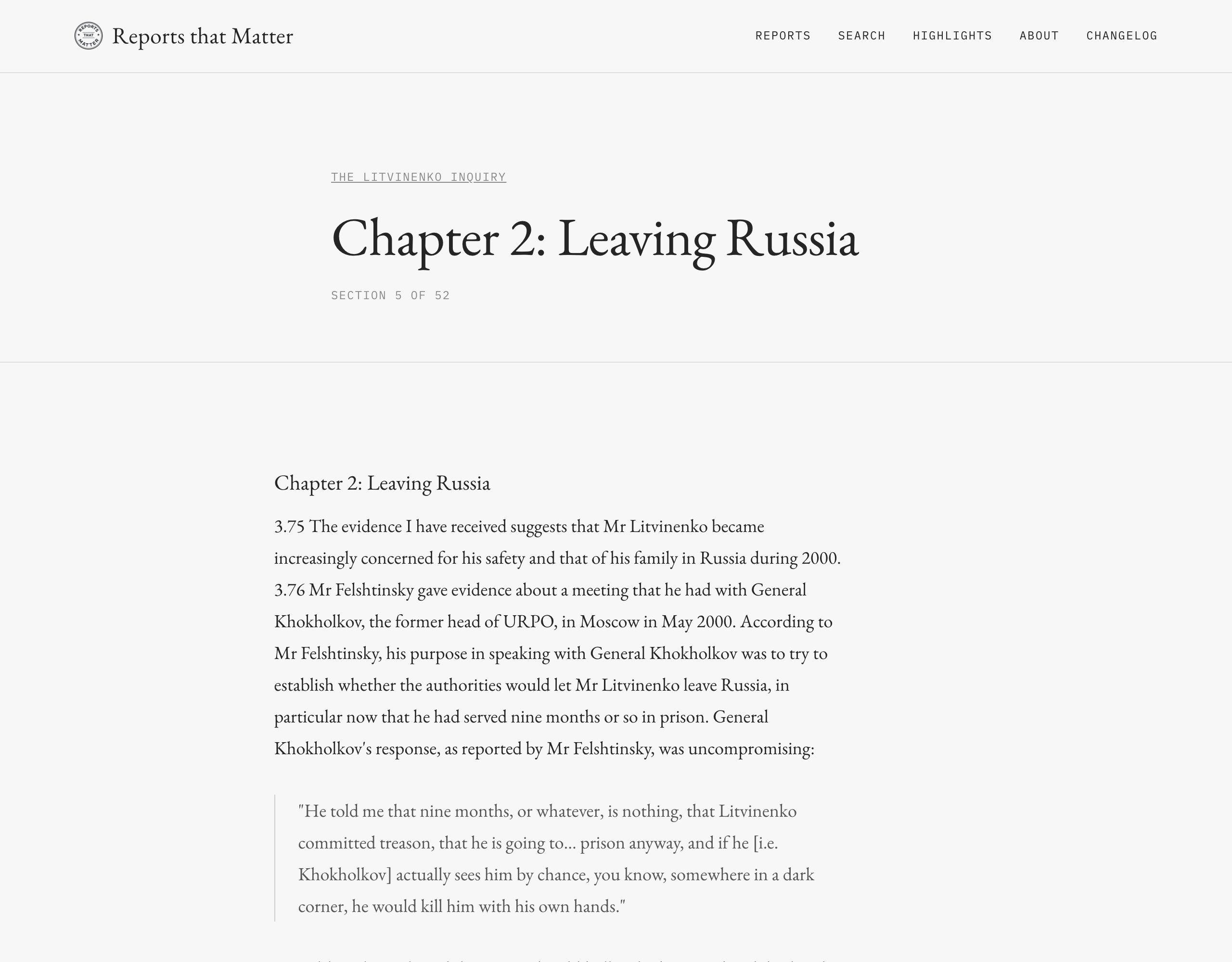
¶The Columbia Accident Investigation Board report joins the archive: 248 pages on the loss of the shuttle and the decisions behind it. It had been ruled out once, because it is set in two columns and the text extractor read straight across them, welding an unrelated sentence into the middle of every paragraph. It is now read a column at a time.
¶Across every report, words the typesetter broke at the end of a line are joined back together — "Chal- lenger" was appearing as two words, and so were another two thousand in Columbia and six hundred in Leveson. Where a document never writes the word whole anywhere, the break is left visible rather than guessed at.
¶The Litvinenko report's footnotes also work properly now: around 230 of them appeared as bare numbers stuck to the end of a word, because the scan lost the space before the superscript.
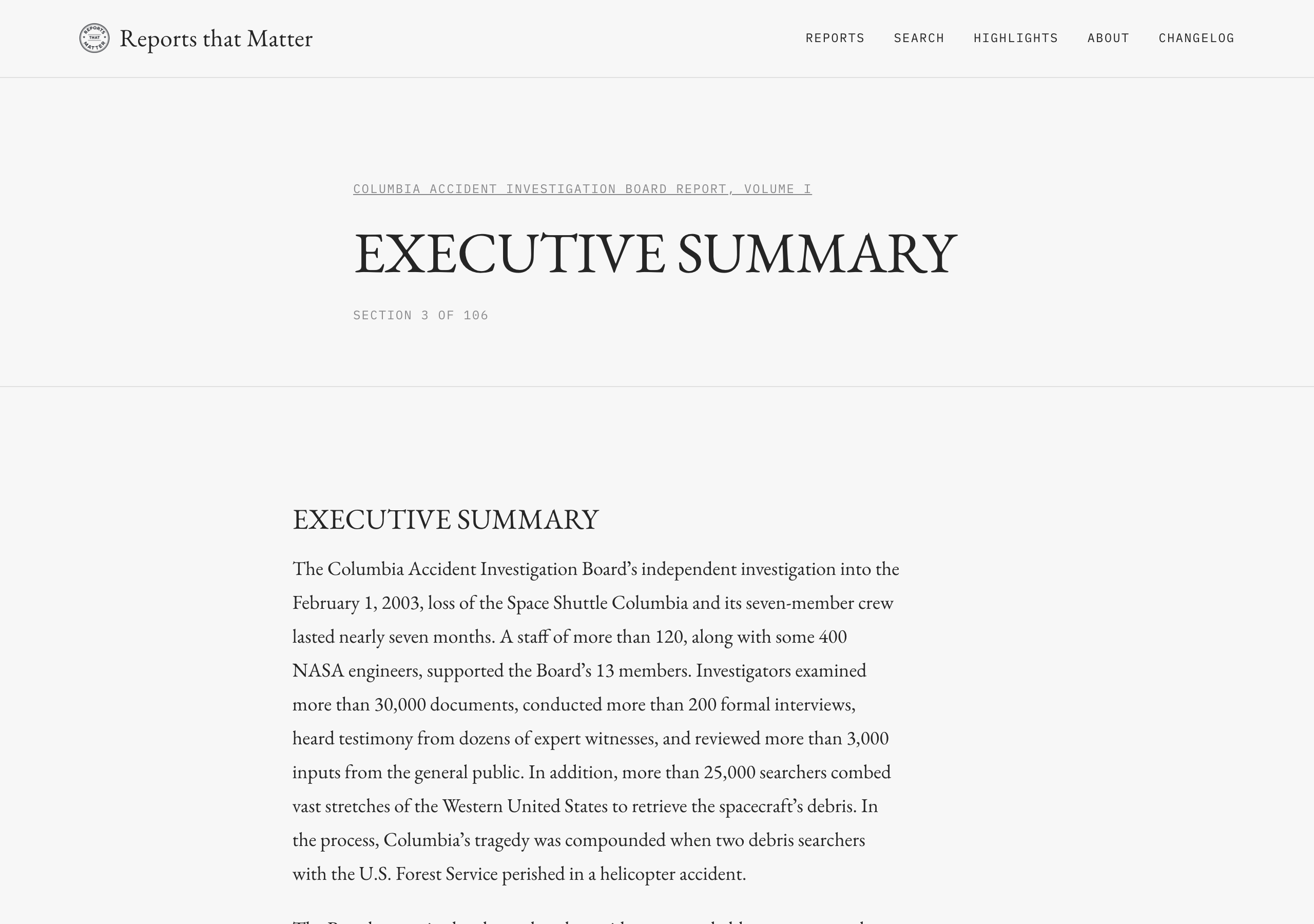
¶Two contents pages also stopped inventing entries: the Jack Smith report had a court docket row listed as though it were a section of the report, and the Leveson contents page had been generating headings out of its own listings.
¶The Columbia text was published three times before it was right — the two columns kept finding new ways to run into each other, and each attempt looked correct until the page was actually read. The full account, with pictures, is in the visual changelog.
2026-08-28 — Thirty half-sentence headings gone, and citations that had quietly collided
¶The Wall Street report's contents page listed thirty headings that stopped mid-sentence — "Safeguard Against High Risk Products. Federal banking regulators should" — each one a numbered recommendation whose second half had been stranded in a separate block. They now read as the recommendations they always were, and five section pages that existed only because of them are gone.
¶Separately, a printed page number is not unique inside these reports: the Jack Smith report prints "2" on three different pages, the Challenger report collides sixteen times. Every occurrence carried the same link target, so a citation to the second page silently landed on the first. Each occurrence now has its own; links that already worked are unchanged.
¶Behind both: every report now records how it was built — which PDFs, in what order — and the pipeline checks its output against the original scans rather than, as it had been doing, against itself.
2026-08-28 — Leveson reads across the page as it does in print
¶Several passages in the Leveson Inquiry were broken at a page edge: running headers appeared in the text, and ordinary continuation lines were shown as quotations. The report now keeps paragraphs together across those page breaks and preserves only genuine indented quotations.
2026-08-28 — The Litvinenko Inquiry gets its real contents page
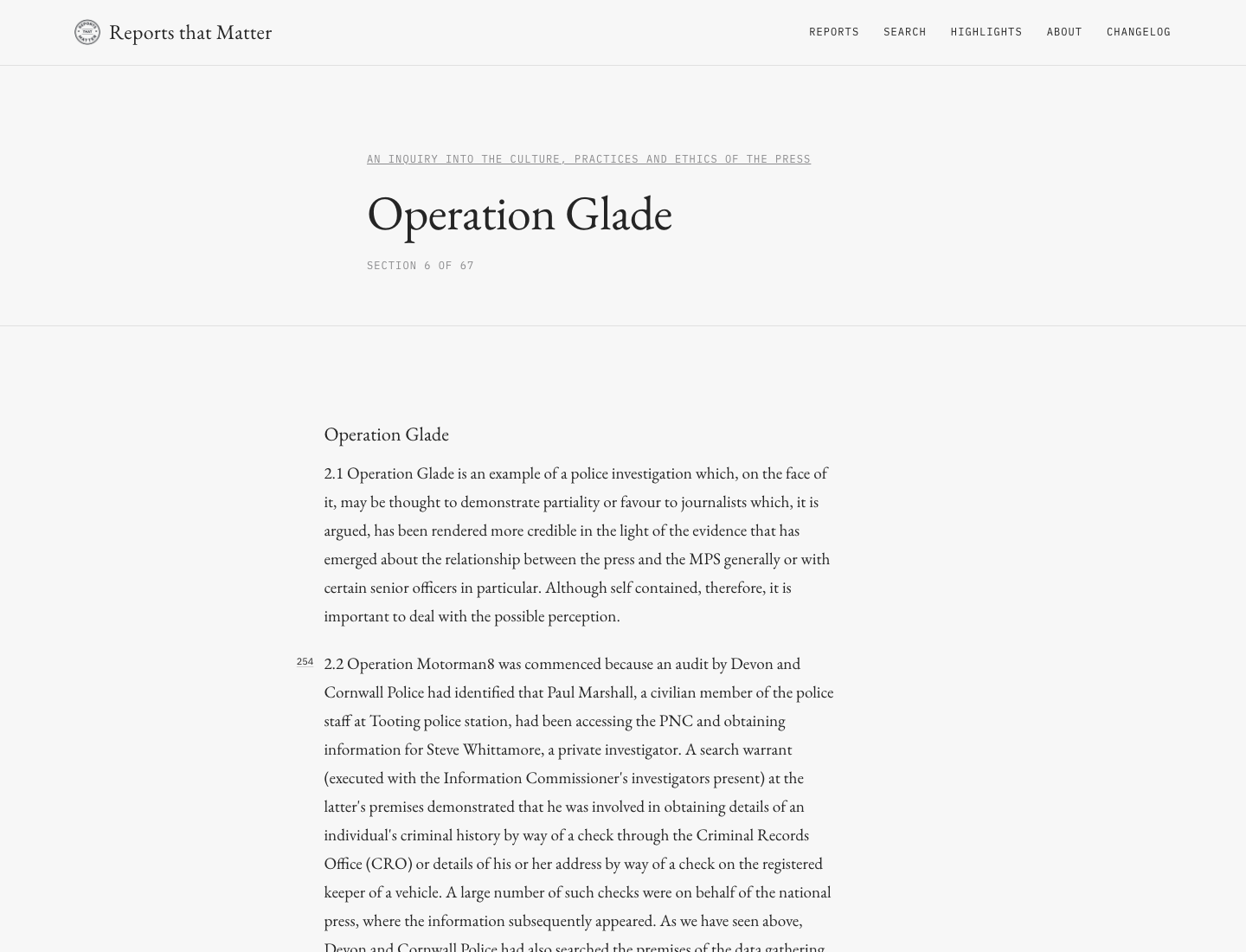
¶The Litvinenko report's table of contents was listing sentence fragments —
"On 23 November 2006, Alexander Litvinenko died at…", "G-BNWB)", "RESTRICTION
ORDER" — because the ingest pipeline recognised A. and I. section markers
but not a label that carries its own number, so every Part and Appendix
heading was read as ordinary text while stray all-caps lines and numbered
narrative sentences were promoted in their place. The pipeline now reads
Part N / Chapter N / Appendix N headings (titles that wrap included),
ignores a lone acronym or an aircraft registration on its own line, and keeps
a numbered narrative sentence out of the heading structure. The contents page
now shows Parts 1–10 with their chapters and all twelve appendices. Part 5's
divider page has no text in the scan, so it is still absent and its chapters
sit under Part 4.
2026-08-22 — A fifth report: Leveson on the press
¶Added: An Inquiry into the Culture, Practices and Ethics of the Press — Lord Justice Leveson's 2012 report into UK press conduct and regulation, prompted by the phone-hacking scandal. Four volumes bound into one continuous document: 2,022 pages, over a million words, the largest report in the archive by a wide margin.
¶The Wall Street and Challenger reports were also re-ingested under the current pipeline and republished, mostly a cleaner table of contents and a list-formatting fix, with nothing lost.
2026-08-22 — Report pages load without touching the source document
¶Every report page used to be rendered from its source markdown on the fly, which was slow enough to occasionally exceed the CPU a single request is allowed and return an error page instead. Report pages are now built once, ahead of time, and served as-is — pages load faster and hold up under a spike of traffic that would previously have knocked some of them offline. No visible change otherwise.
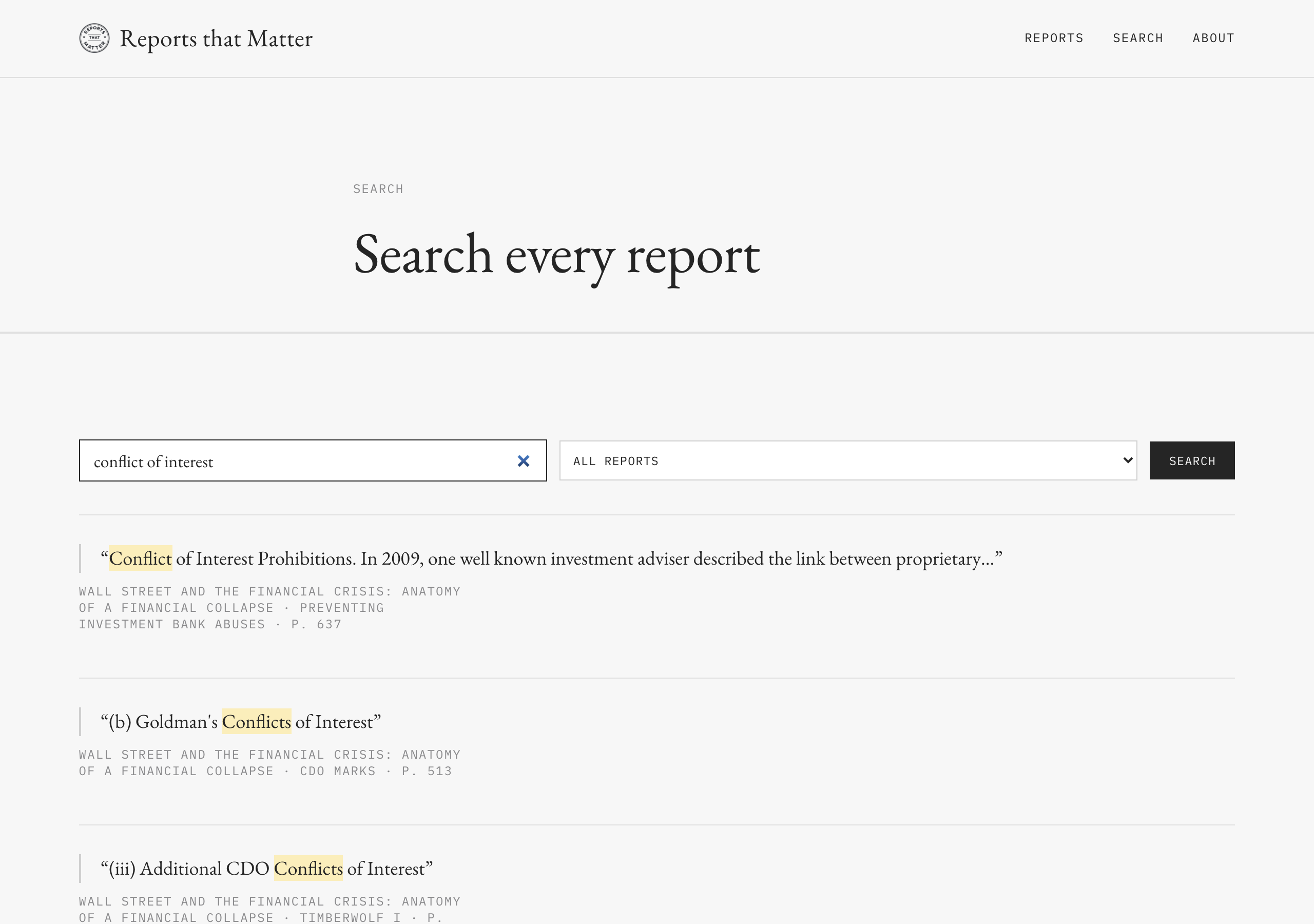
¶Search across every report. Find a name, a date, a bank — anywhere in the archive, not just the report you happen to be reading. A result is the exact matched passage, not a page to go hunting through: it shows the sentence, the report and section it's in, the printed page, and follows through to those exact words highlighted, the same as any shared link. Scope a search to one report from that report's own page, or search everything from the header.
2026-08-21 — Quote the exact words, and keep what you find
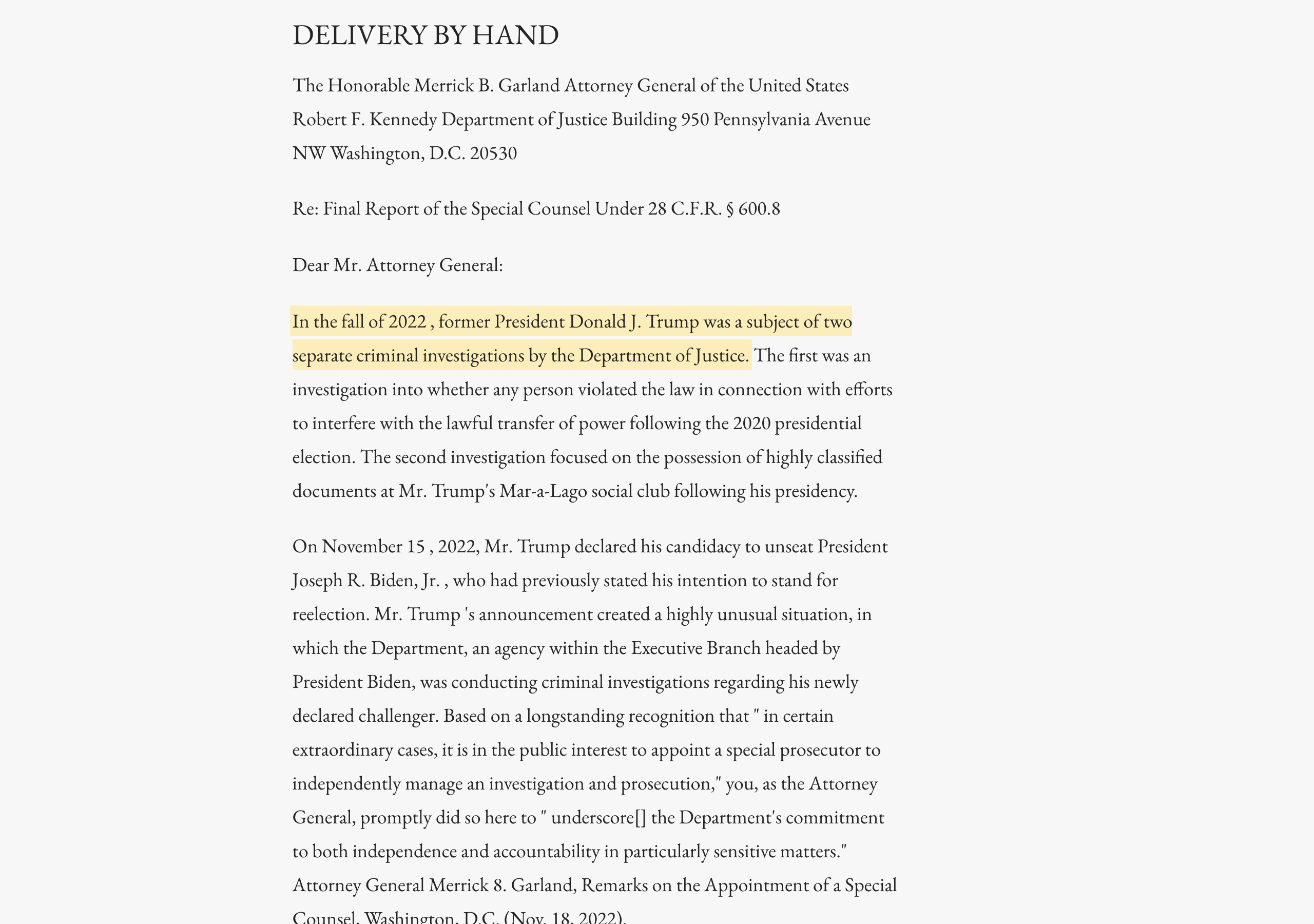
¶Quoting longer passages, and lists that read in order. Selecting several sentences now produces a link to exactly those sentences rather than to the paragraph around them, and a quote can run across a paragraph break. Footnotes in the margin stay out of a selection made in the body. Separately, bulleted lists in the source documents are now rendered as lists: they used to be run together into a single paragraph, with a wrapped item's tail appearing after the item that followed it — a defect reported against the original site in 2016.
¶Highlights you can take with you. Save a passage and it is still marked when
you come back. Everything you have kept is listed at /highlights and exports
as Markdown — quote, source, printed page, and a link back to the exact words.
It lives in your browser: no account, and none of it is sent to us.
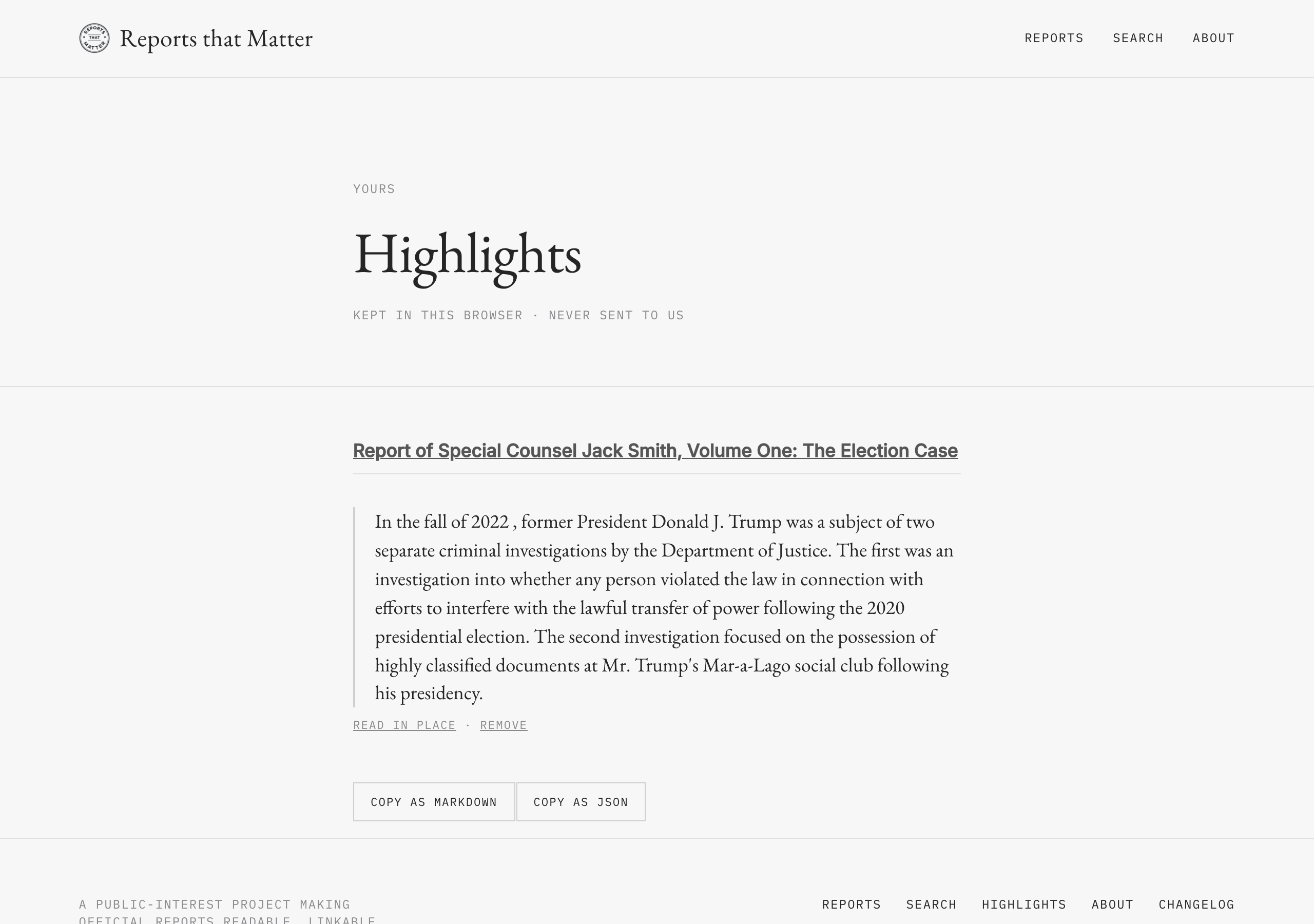
¶What other readers marked. A passage highlighted by another reader now shows the same way any highlight does, faintly at first and stronger as more readers mark it — no count printed, just the sense that this passage caught someone's attention too. Nothing is recorded until a reader shares or saves a passage, and nothing about a reader is kept, only a passage and how many people marked it.
2026-08-09 — Contents pages read as a hierarchy
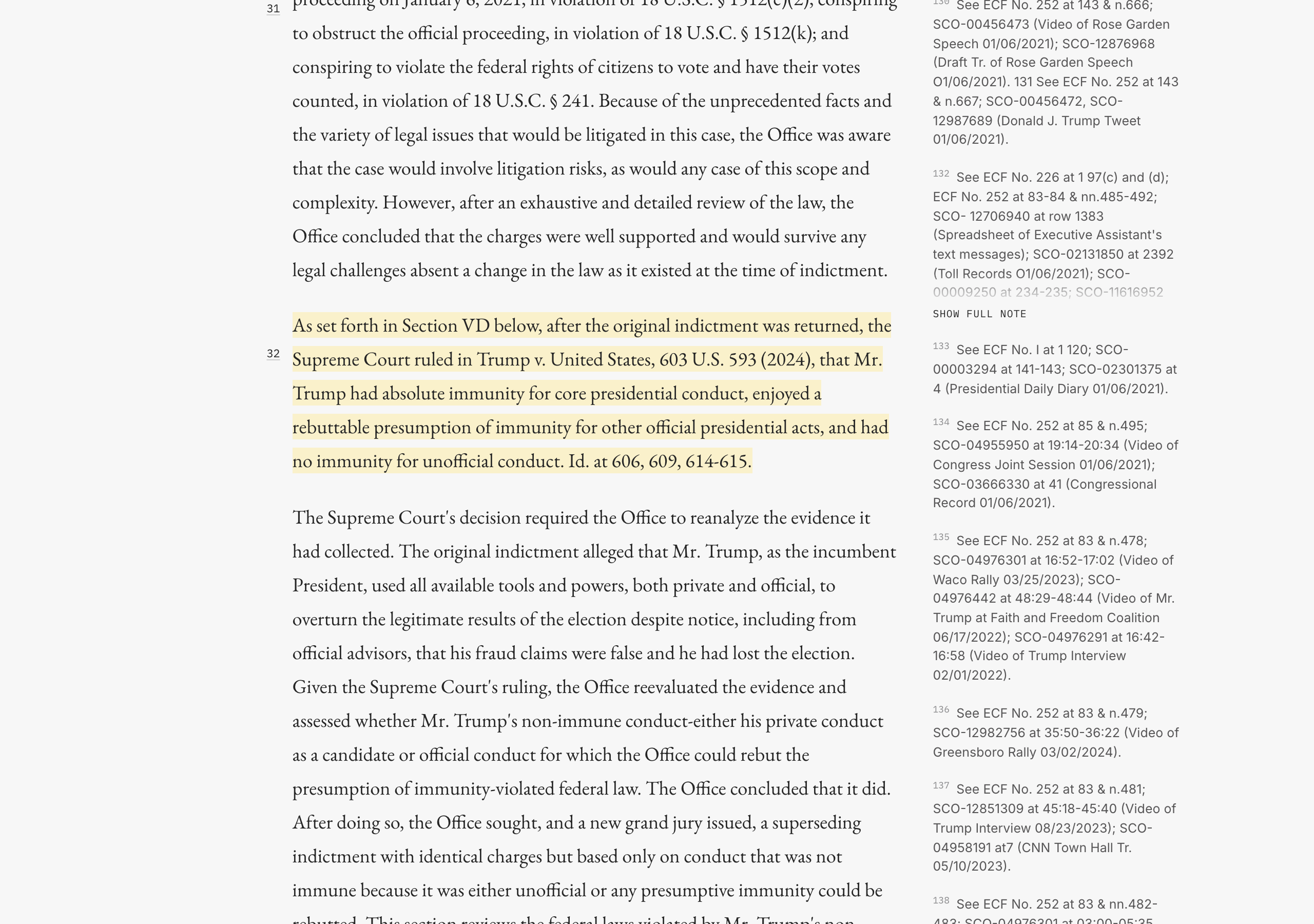
¶The contents page listed every section flat, with no way to tell a subsection from the part it belongs to. Sections now indent under their part:
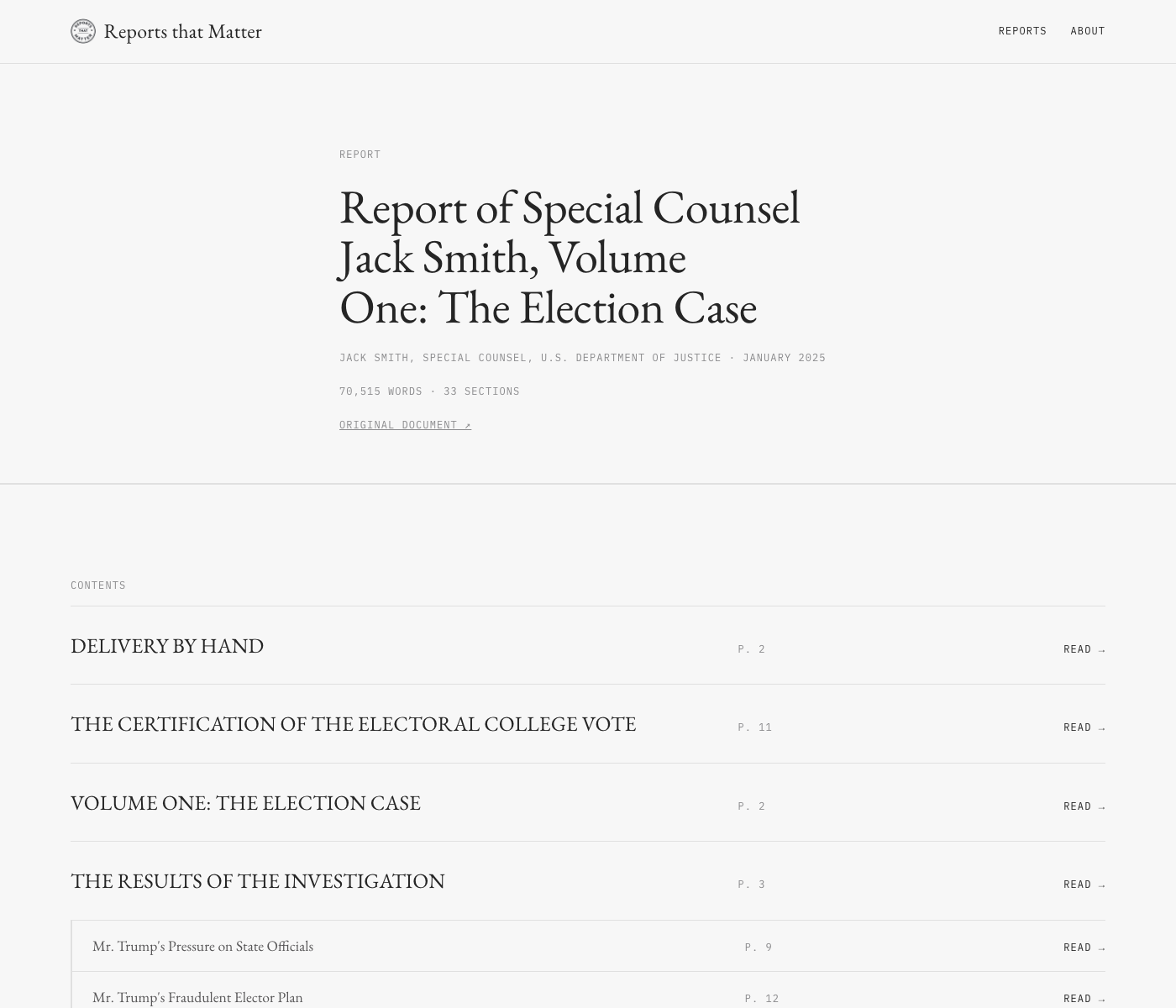
¶A long footnote also no longer drags the notes after it out of alignment or spills into the footer — clamped to about 8 lines with a "Show full note" toggle:
¶Full before/after: visual-changelog.
2026-08-02 — A third report, and better footnotes everywhere
¶Added: Investigation of the Challenger Accident — the House Science Committee's 1986 report into the loss of the Space Shuttle Challenger. 438 pages, 99.8% of the source text retained.
¶Footnotes. Nearly all of them are now found and placed beside the text: recall went from about three-quarters to around 97%. Where a footnote block had previously been missed, its citations were left stranded in the middle of the prose; that no longer happens.
¶Page numbers now work for reports that print them at the top of the page as well as the bottom. The Wall Street report puts them in a header and so had no page anchors at all — it now has 628.
¶Contents pages are cleaner. Numbered recommendations were being read as section headings, filling a contents list with half-sentences.
2026-08-02 — Reports split into sections
¶A report is no longer one enormous page. The Wall Street report was 2.9 MB — not a reading experience, a download. Each report now opens on its contents, and each section is a page of its own, following the document's own structure. The whole report is still available on one page for anyone who wants to search across it.
¶Links made before the split still work. A link naming a passage is routed to the section holding it, and anything else falls back to the whole-report view.
2026-08-02 — The archive is back
¶The previous version of this site is readable again at old.reportsthatmatter.org. Its old URLs redirect there.
2026-08-02 — The Wall Street report, properly converted
¶The PSI financial crisis report had been converted before the ingestion pipeline existed, and it showed. 8,178 blocks with a median length of 89 characters — prose paragraphs run to about 600 — because every line of the PDF had become its own paragraph. 1,641 stray page numbers left mid-text. Two headings in a 645-page document.
¶Re-ingested from the source PDF: 162 headings, 98.3% of the source text retained, no stranded page numbers, and paragraphs that are actually paragraphs.
¶Doing it exposed a real gap. Footnote numbers appear in two layouts — inline with their text, or alone on a line with the text beneath — and only the first was supported. This report had yielded 7 footnotes; it now yields 1,356, rendered as 2,725 sidenotes. The Jack Smith report gained from the same fix, 206 → 229.
¶The report moved to /reports/us-psi-financial-crisis, matching its source
repository. The old URL redirects.
2026-08-02 — Sidenotes, and links that stay put
¶Sidenotes. Footnotes now sit in the margin beside the sentence they support rather than 70 KB away at the end of the document. A footnote you have to travel to is a footnote nobody reads, and in these reports the citation is the evidence. On narrow screens, where there is no margin, a note opens on tap.
¶Stable paragraph links. Paragraph addresses now derive from the paragraph's
own opening words — #rioters-capitol rather than #p-318. The old scheme
numbered by position, which meant that re-converting a report to fix a single
scanning error renumbered everything after it: every link ever shared kept
working while quietly pointing at different text. For a project whose whole
proposition is citing the exact passage, that was the worst available failure.
¶Printed page anchors. The page numbers from the original document are now
addressable — #page-46 — and shown in the margin. It is how these documents
are actually cited, and it can be checked against the original PDF.
2026-08-01 — The site, rebuilt
¶A new design: off-white, mid-grey rather than black, a classical serif for the documents themselves and small monospaced type for everything structural. Fewer things, more space. Serious documents should look serious.
¶Behind it, a new ingestion pipeline — PDF in, clean Markdown out, deterministically — with automated fidelity checks that gate on what can actually be decided: that no text was invented, that none was lost, that no page furniture survived. Whether a scan was read correctly is a human judgement, so the pipeline surfaces the passages most likely to be wrong for review rather than hiding them behind a score.
¶First report through it: the Jack Smith Special Counsel report, Volume One — 169 pages, 99% of the source retained, every paragraph individually linkable.
¶Highlight any passage to copy a link straight to it.
¶The previous site remains readable in the archive; its URLs redirect there.